 Translate

ISO 9001 Certification in Iran helps organizations implement a systematic approach to managing quality, improving efficiency, and delivering consistent outcomes to customers. As Iran continues to strengthen its industrial base across manufacturing, oil and gas, construction, healthcare, logistics, and professional services, ISO 9001 has become a key indicator of organizational reliability and structured management.
First Cert works closely with organizations throughout Iran to develop ISO 9001-compliant Quality Management Systems that reflect actual operational practices. Our emphasis is on improving performance, accountability, and customer satisfaction rather than creating documentation for audit purposes alone.
Understanding ISO 9001 Certification in Iran
ISO 9001 Certification in Iran confirms that an organization has implemented and maintained a Quality Management System aligned with international ISO 9001 requirements. The standard focuses on process control, customer focus, leadership involvement, and continuous improvement.
An effective ISO 9001 framework supports:
- Defined and controlled workflows across key business functions
- Clear understanding of customer requirements and service expectations
- Leadership-driven quality objectives and performance monitoring
- Risk-based thinking to minimize errors and inefficiencies
- Measurement, evaluation, and ongoing improvement of processes
Certification demonstrates that quality is built into daily operations and decision-making processes.
Industries in Iran That Commonly Adopt ISO 9001
ISO 9001 Certification in Iran is applicable across diverse sectors and organization sizes, including:
- Manufacturing plants and industrial service providers
- Energy, oil, and gas contractors and suppliers
- Construction companies and infrastructure projects
- Logistics, transportation, and supply chain operations
- IT service firms, startups, and digital solution providers
- Hospitals, clinics, and healthcare support services
- Educational institutions, consultancies, and professional firms
By adopting ISO 9001, organizations in Iran can improve operational discipline, reduce variability, and strengthen stakeholder confidence.
Business Advantages of ISO 9001 Certification in Iran
Organizations that achieve ISO 9001 Certification in Iran experience multiple strategic and operational benefits, such as:
Greater consistency in product and service delivery
Increased customer confidence and satisfaction
Improved alignment with regulatory, contractual, and tender requirements
Reduction in process errors, rework, and operational waste
Enhanced reputation in both domestic and international markets
ISO 9001 encourages a culture of ownership, clarity, and continual performance enhancement across the organization.
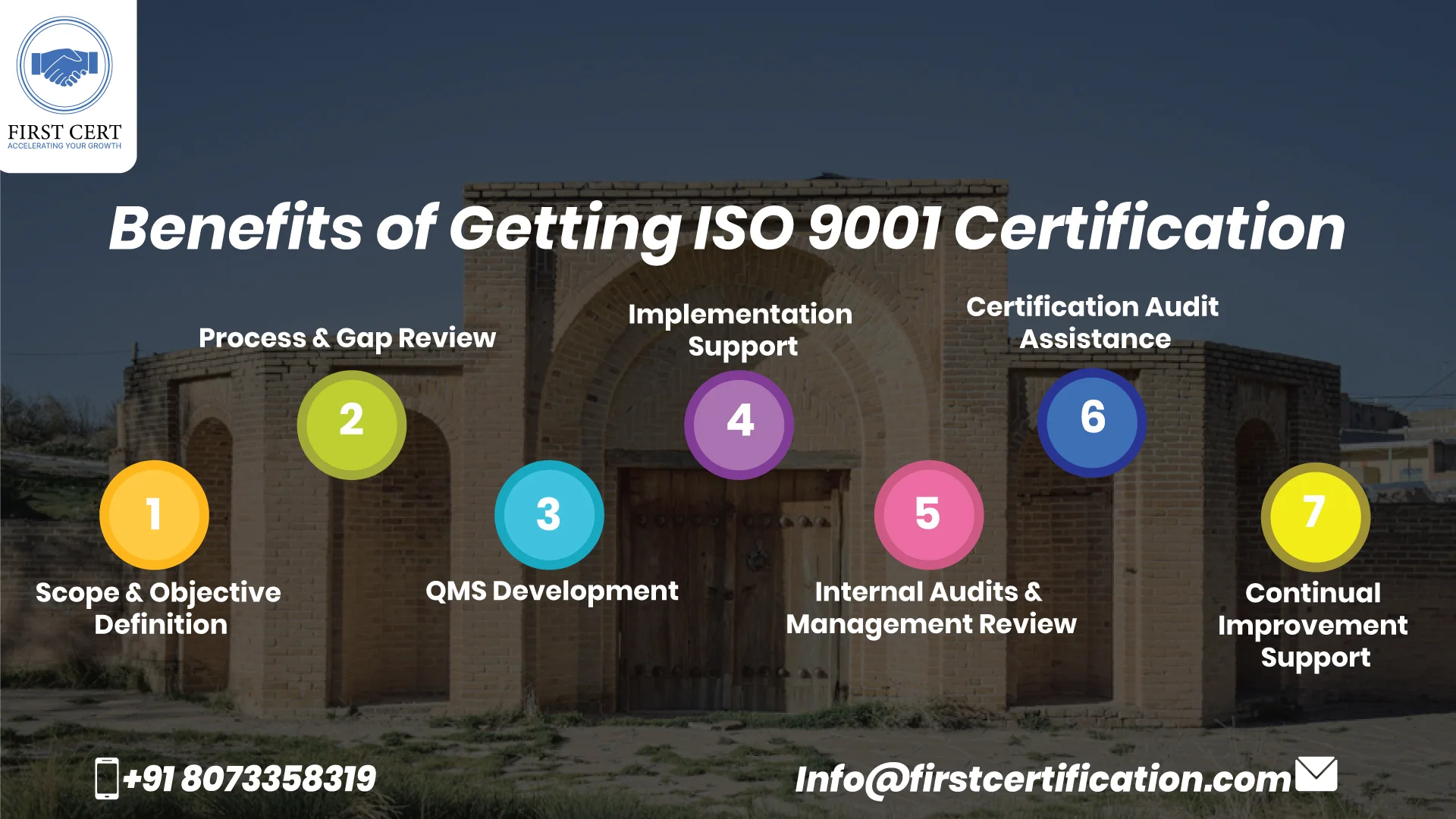
First Cert's ISO 9001 Consulting Framework in Iran
First Cert delivers ISO 9001 consulting services in Iran using a practical and structured methodology:
Scope & Objective Definition
Identify processes, boundaries, and quality goals
Process & Gap Review
Compare existing practices with ISO 9001 requirements
QMS Development
Design quality policies, procedures, and control mechanisms
Implementation Support
Assist teams in adopting standardized practices
Internal Audits & Management Review
Validate system effectiveness
Certification Audit Assistance
Support Stage 1 and Stage 2 audits
Continual Improvement Support
Maintain and enhance the QMS post-certification
ISO 9001 Certification Cost in Iran
- Organization size and management structure
- Nature and complexity of business activities
- Scope of certification and number of operational sites
- Existing quality systems and documentation maturity
- Training requirements and audit scope
Begin your ISO 9001 Certification journey in Iran with First Cert and demonstrate your commitment to quality excellence and continual improvement.
