 Translate

GDPR Certification in Iran supports organizations in responsibly managing personal data related to individuals located within the European Union. As Iranian companies increasingly participate in cross-border services, digital commerce, outsourcing, and international partnerships, GDPR compliance has become a critical requirement for maintaining credibility and contractual eligibility.
First Cert works with organizations across Iran to embed GDPR principles into daily operations. Our methodology focuses on practical governance, accountability, and risk management—ensuring privacy compliance becomes a sustainable business function rather than a one-time legal exercise.
What GDPR Certification in Iran Demonstrates
GDPR Certification in Iran signifies that an organization aligns its data processing activities with the principles of the EU General Data Protection Regulation. This ensures that personal data is handled lawfully, securely, and transparently across its entire lifecycle.
A strong GDPR compliance framework typically includes:
- Clearly defined lawful bases for data collection and processing
- Controlled handling of data storage, access, retention, and transfer
- Structured processes for responding to data subject rights requests
- Technical and organizational measures to safeguard personal information
- Incident response plans for breach detection and regulatory notification
Certification reflects a mature approach to privacy governance and compliance accountability.
Who in Iran Is Subject to GDPR
GDPR applies to organizations in Iran that process or manage personal data belonging to individuals located in the European Union, regardless of where the organization operates. Commonly impacted sectors include:
IT companies, software developers, and managed service providers
SaaS platforms, cloud service providers, and digital startups
E-commerce businesses, subscription services, and online marketplaces
Data processing firms and outsourcing service providers
Financial institutions, fintech companies, and payment processors
Healthcare, research, and life sciences organizations
Marketing, analytics, and data-driven consulting firms
GDPR compliance enables Iranian organizations to operate confidently within EU regulatory expectations.
Strategic Benefits of GDPR Certification in Iran
Organizations achieving GDPR Certification in Iran gain both regulatory assurance and competitive advantages, including:
Clear oversight and accountability for personal data usage
Reduced risk of non-compliance penalties and contractual disputes
Increased confidence from EU customers, regulators, and partners
Defined privacy roles, responsibilities, and escalation mechanisms
Stronger brand positioning as a privacy-conscious organization
GDPR transforms data protection into a foundation for trust and sustainable growth.
First Cert's GDPR Implementation Approach in Iran
First Cert follows a structured and business-aligned GDPR compliance methodology tailored to Iranian organizations:
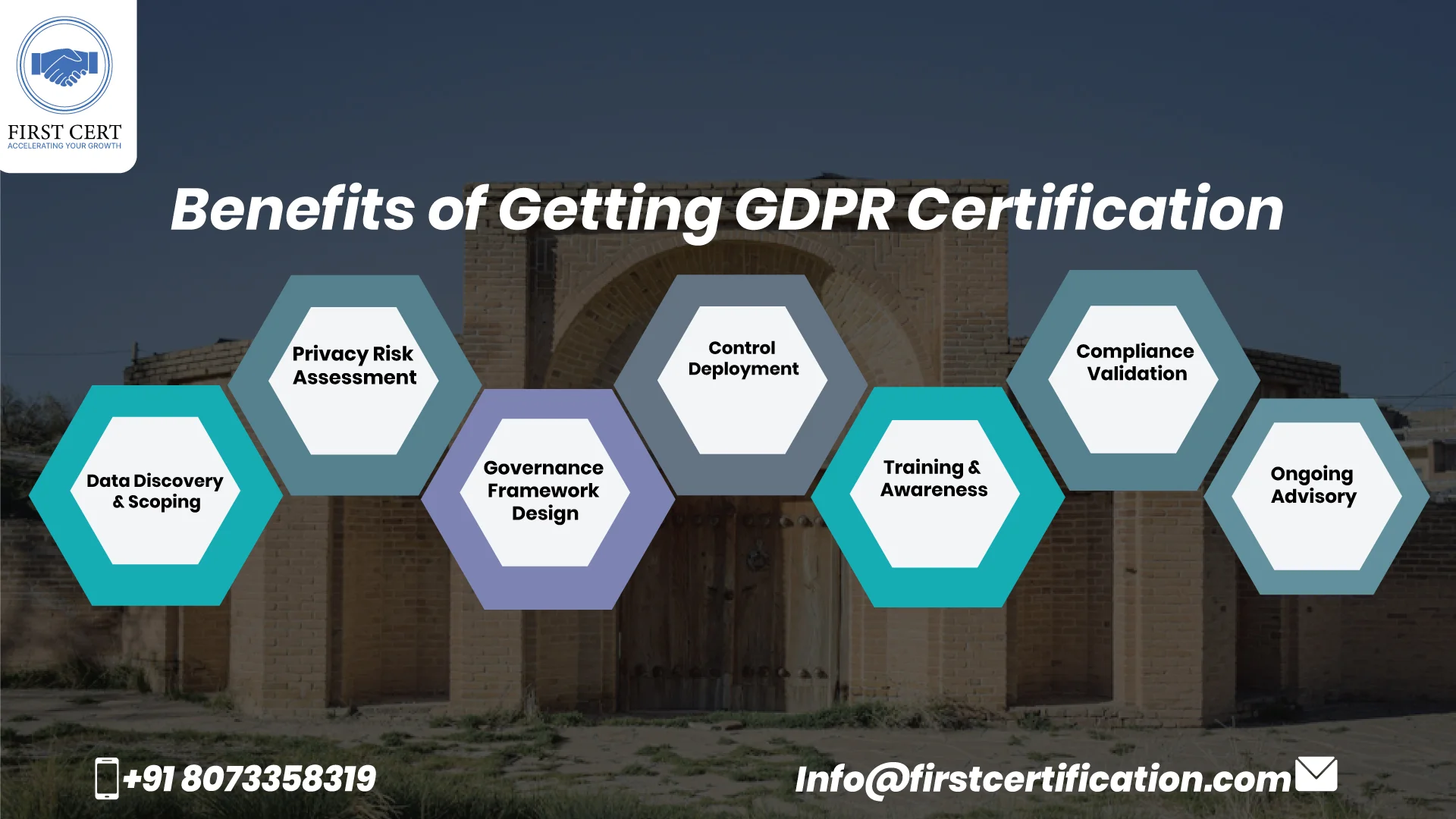
Data Discovery & Scoping
Identify personal data types, sources, and processing activities
Privacy Risk Assessment
Evaluate compliance gaps and exposure areas
Governance Framework Design
Develop privacy policies, notices, and processing records
Control Deployment
Implement access controls, retention schedules, and response workflows
Training & Awareness
Educate staff and leadership on GDPR responsibilities
Compliance Validation
Review implementation effectiveness and close gaps
Ongoing Advisory
Support regulatory updates and continuous compliance management
GDPR Certification Cost in Iran
- Organization size and operational complexity
- Volume, sensitivity, and types of personal data processed
- Use of third-party vendors and cross-border data transfers
- Scope of documentation, training, and advisory support required
- Existing maturity of information security and privacy controls
Start your GDPR Certification journey in Iran with First Cert and establish a strong, privacy-driven foundation for global confidence and regulatory excellence.
