

HIPAA Certification in Seattle helps organizations handling U.S. healthcare data implement strong privacy, security, and accountability frameworks. Seattle's healthcare ecosystem—including telehealth providers, biotech startups, digital health platforms, SaaS solutions, and outsourcing services—requires robust compliance to maintain trust with hospitals, insurers, and technology partners.
First Cert assists Seattle-based organizations in integrating HIPAA requirements into daily operations, focusing on actionable risk management, secure practices, and audit readiness rather than mere documentation.
What HIPAA Certification Means in Seattle
HIPAA Certification demonstrates that an organization fully complies with the U.S. Health Insurance Portability and Accountability Act by establishing strong administrative, technical, and physical safeguards to protect Protected Health Information (PHI). It ensures clear ownership and accountability for how PHI is created, accessed, stored, and shared across the organization, reducing the risk of misuse or unauthorized disclosure.
Through role-based access controls, encryption, and secure system configurations, HIPAA-certified organizations restrict sensitive data access only to authorized personnel and protect information both at rest and in transit. Secure storage practices for devices, electronic records, and physical facilities further strengthen defenses against data loss, theft, or accidental exposure.
In addition, HIPAA requires organizations to maintain robust incident response plans, enabling rapid breach detection, effective containment, timely reporting, and corrective actions. Overall, HIPAA Certification provides assurance to patients, clients, partners, and regulators that healthcare data is handled with the highest standards of confidentiality, integrity, and security, reinforcing trust, regulatory compliance, and long-term operational reliability.
Organizations in Seattle That Require HIPAA Compliance
HIPAA applies to organizations handling U.S. healthcare data, such as:
Hospitals, clinics, and medical practices
Telehealth and digital healthcare platforms
Medical billing, coding, and revenue cycle providers
Biotech companies and clinical research labs
IT service providers, SaaS, and cloud vendors
Healthcare outsourcing and shared service centers
HIPAA compliance enables these organizations to operate confidently in regulated healthcare environments.
Benefits of HIPAA Certification in Seattle
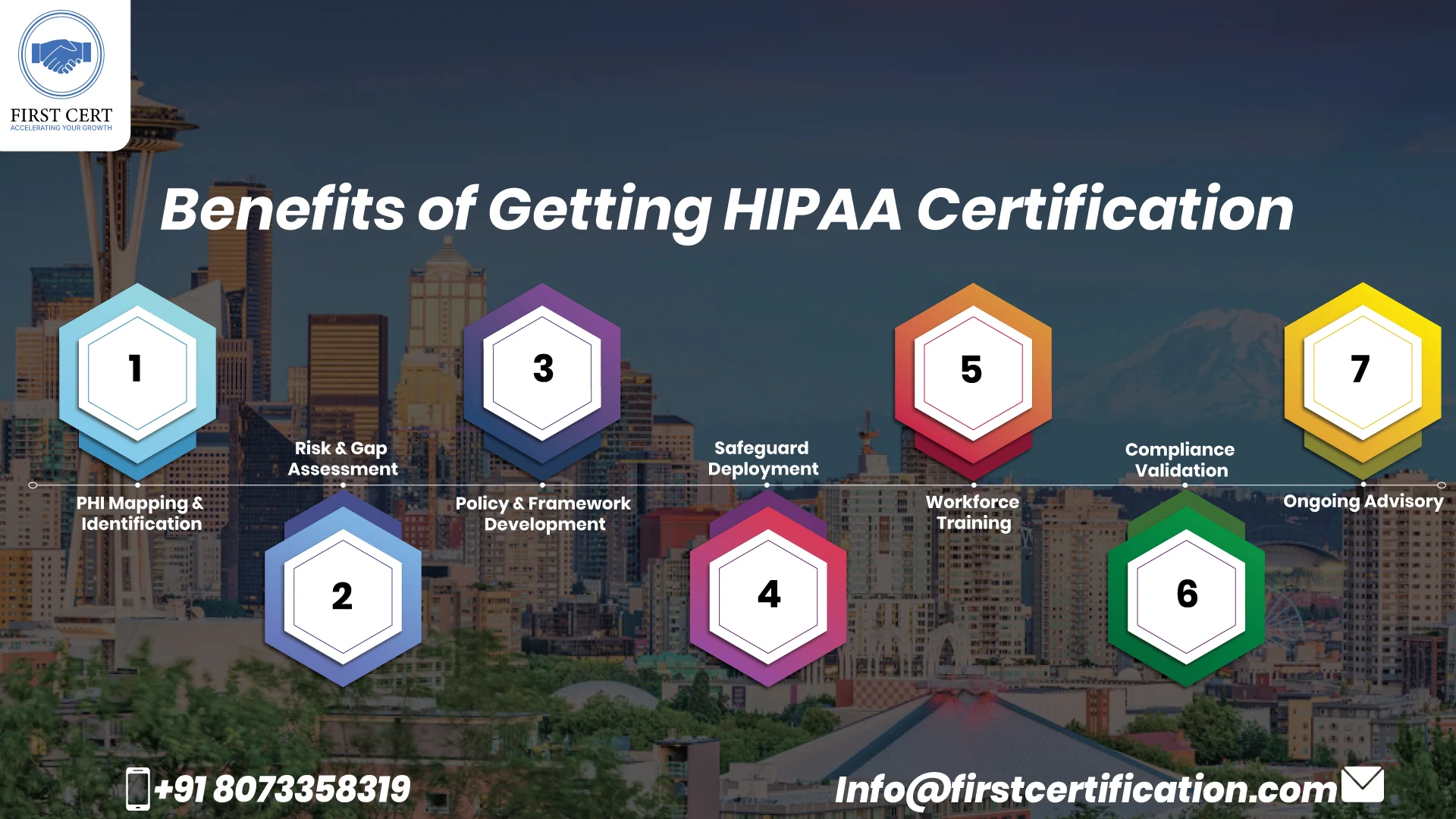
Lower risk of data breaches, fines, and legal exposure
Stronger control over sensitive healthcare information
Enhanced trust among clients, auditors, and partners
Improved workforce awareness and accountability
Greater credibility as a compliant healthcare organization
HIPAA compliance supports both regulatory readiness and long-term operational stability.
First Cert's HIPAA Implementation Approach in Seattle
PHI Mapping & Identification
Document all healthcare data flows
Risk & Gap Assessment
Identify privacy, security, and operational vulnerabilities
Policy & Framework Development
Implement HIPAA-aligned procedures
Safeguard Deployment
Apply technical, administrative, and physical protections
Workforce Training
Conduct role-based awareness sessions
Compliance Validation
Test controls and remediate gaps
Ongoing Advisory
Provide continuous guidance and audit readiness
HIPAA Certification Cost in Seattle
- Organization size and complexity
- Volume and type of PHI processed
- IT infrastructure and cloud usage
- Current privacy and security maturity
- Training, audit preparation, and ongoing support needs