 Translate


HIPAA Certification in Qatar helps healthcare providers and IT service organizations protect sensitive patient information while meeting U.S. healthcare data protection requirements. First Cert supports organizations in building secure systems, minimizing compliance risks, and ensuring lawful handling of Protected Health Information (PHI).
Our comprehensive HIPAA consulting services cover everything from initial assessment and policy development to employee training and audit readiness. With First Cert, organizations in Qatar can achieve HIPAA compliance efficiently while maintaining high standards of privacy and data security.
What is HIPAA Certification in Qatar?
HIPAA (Health Insurance Portability and Accountability Act) is a U.S. regulation focused on safeguarding patient health data. HIPAA Certification in Qatar ensures that organizations handling U.S. patient information follow strict security, privacy, and breach management controls.
This certification helps organizations establish secure access controls, encrypted data storage, risk management procedures, and incident response plans. Businesses in Qatar working with U.S. healthcare providers or medical data must follow HIPAA standards to remain compliant and trusted.
Which Businesses Need HIPAA Certification in Qatar?
HIPAA Certification is essential for organizations in Qatar that process, store, or transmit healthcare data related to U.S. patients, including:
Hospitals and Medical Clinics
Diagnostic and Research Laboratories
Healthcare Outsourcing Companies
Health-Tech and Telemedicine Platforms
Medical Billing and Coding Firms
Pharmaceutical and Life Sciences Companies
IT & Cloud Service Providers Supporting Healthcare Systems
Implementing HIPAA strengthens compliance, improves security posture, and supports international healthcare partnerships.
Key Benefits of HIPAA Certification in Qatar
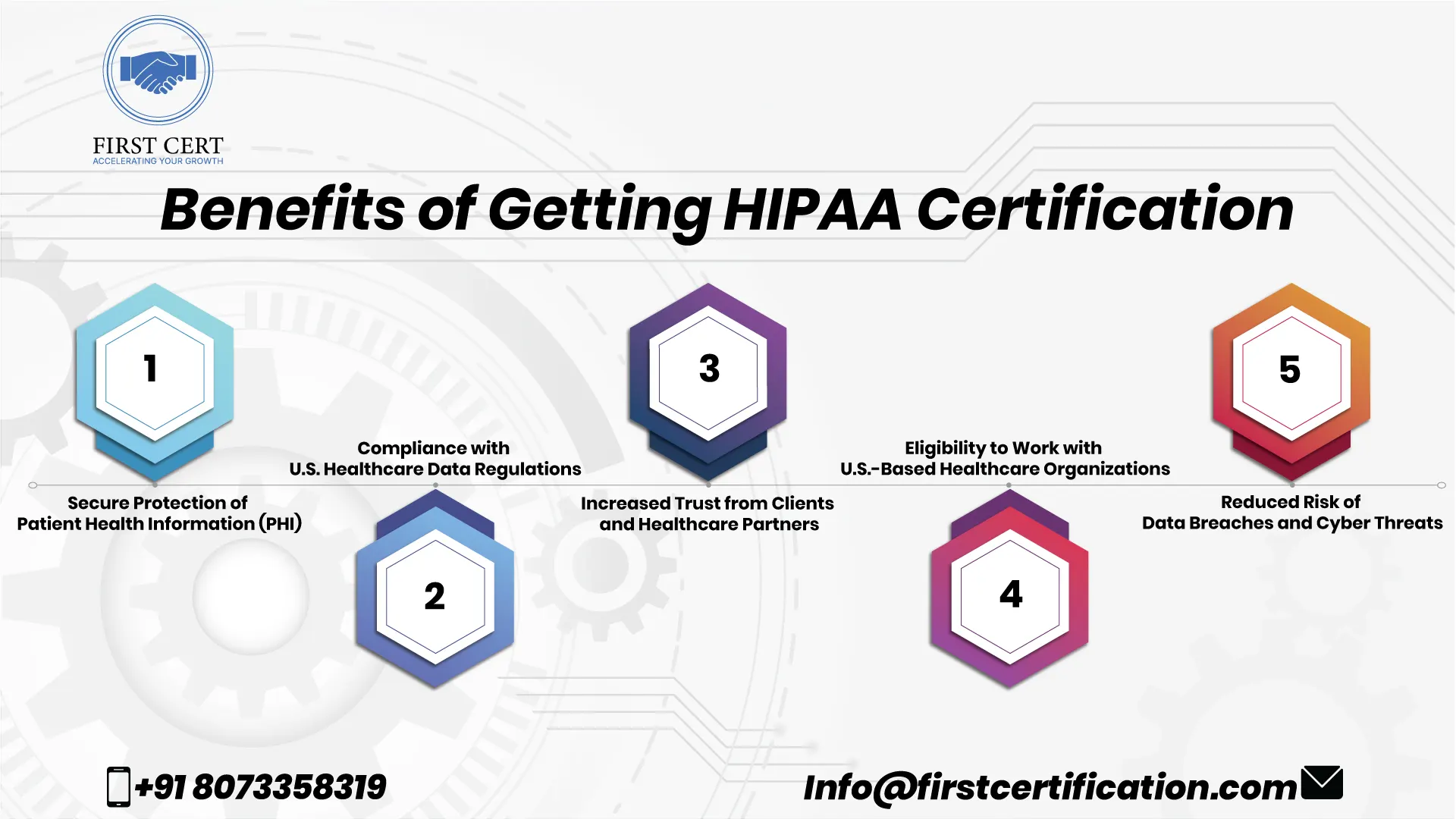
Secure Protection of Patient Health Information (PHI).
Compliance with U.S. Healthcare Data Regulations.
Increased Trust from Clients and Healthcare Partners.
Eligibility to Work with U.S.-Based Healthcare Organizations.
Reduced Risk of Data Breaches and Cyber Threats.
HIPAA certification positions organizations as reliable and security-focused healthcare service providers.
HIPAA Certification in Qatar – Implementation Approach with First Cert
Our structured HIPAA compliance methodology includes:
Scope Definition & Consultation
Identify data flows and HIPAA compliance requirements.
Gap & Risk Assessment
Evaluate existing security controls.
Policy & Documentation Development
HIPAA privacy, security, and breach response policies.
Implementation Support
Apply technical and administrative safeguards.
Staff Awareness & Training
Role-based HIPAA training programs.
Internal Review & Remediation
Address gaps before final validation.
Ongoing Compliance Support
Updates, monitoring, and compliance maintenance.
How Much Does HIPAA Certification Cost in Qatar?
- Number of employees
- Volume and type of PHI handled
- IT infrastructure and system architecture
- Existing security maturity
- Documentation and training needs
- Compliance scope and assessment effort
