 Translate

GDPR Certification in Qatar helps organizations establish reliable data privacy practices while complying with the EU General Data Protection Regulation. With increasing global data exchange, companies operating in Qatar must ensure personal data is collected, processed, and stored responsibly.
First Cert supports organizations across Qatar by delivering end-to-end GDPR compliance solutions, covering assessment, documentation, training, and audit preparation. Our structured approach ensures legal compliance, reduced risk exposure, and improved customer confidence.
What is GDPR Certification in Qatar?
GDPR Certification in Qatar is a structured compliance approach aligned with the EU General Data Protection Regulation, designed to safeguard personal data and enhance transparency in data handling activities.
Organizations in Qatar that process data belonging to EU citizens are legally required to meet GDPR obligations. Compliance enables businesses to:
- Protect personal and sensitive information
- Establish transparent data processing practices
- Minimize legal, regulatory, and reputational risks
- Strengthen global credibility and customer trust
Industries such as IT, SaaS, BPO, fintech, healthcare, e-commerce, and digital services benefit significantly from GDPR implementation. GDPR certification demonstrates that Qatar-based organizations follow international privacy standards and are prepared for global business engagements.
Which Businesses Need GDPR Certification Implementation in Qatar?
Any organization in Qatar that handles EU personal data must implement GDPR compliance, including:
IT and software development companies
SaaS and cloud service providers
E-commerce and online platforms
BPOs, KPOs, and data processing firms
Banks, fintech, and financial institutions
Healthcare, pharma, and life sciences organizations
Marketing, analytics, and digital agencies
Startups serving EU customers or operating digital platforms
GDPR implementation helps organizations in Qatar avoid penalties, prevent data breaches, and build long-term trust with international clients.
Benefits of Getting GDPR Certification in Qatar
Organizations achieving GDPR Certification in Qatar gain multiple advantages:
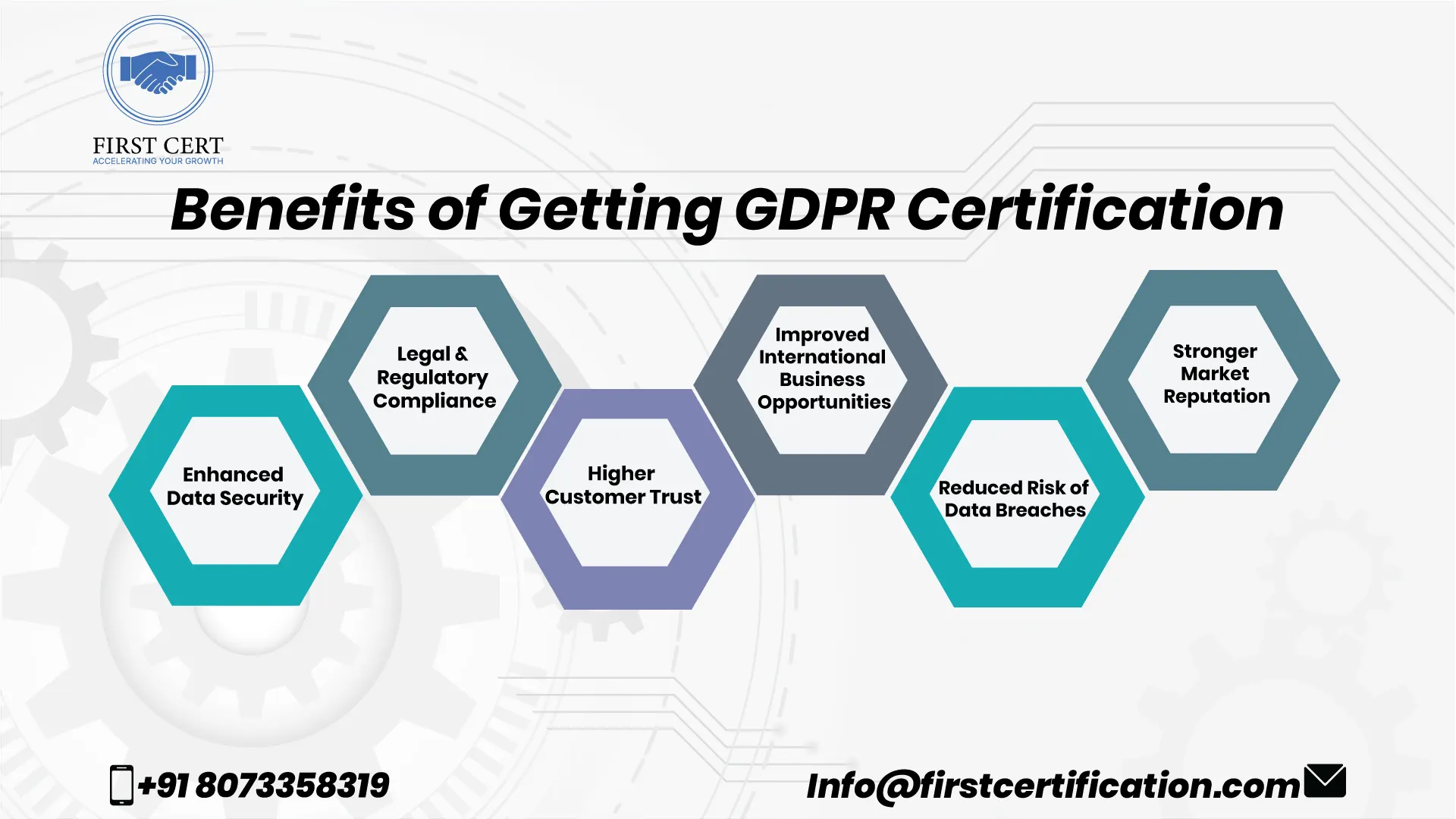
Enhanced Data Protection – Secure handling of customer and employee data.
Regulatory Compliance – Alignment with EU data privacy requirements.
Improved Customer Confidence – Demonstrates commitment to privacy.
Expanded International Opportunities – Enables seamless engagement with EU partners.
Lower Breach Risk – Early identification and mitigation of vulnerabilities.
Stronger Brand Image – Positions your business as privacy-focused and trustworthy.
With First Cert, achieving GDPR certification becomes smooth, guided, and results-driven.
GDPR Certification in Qatar – Implementation Approach by First Cert
Initial Consultation & Data Discovery
Understand data flow and compliance scope.
Gap Assessment
Identify non-compliance areas against GDPR requirements.
Policy & Documentation Development
Privacy policies, consent forms, ROPA, and DPAs.
Implementation Support
Data protection controls, access management, and encryption.
Employee Training
GDPR awareness and role-specific training.
Internal Audit & Readiness Review
Corrective actions before final assessment.
Certification & Ongoing Support
Continuous monitoring and compliance updates.
How Much Does GDPR Certification Cost in Qatar?
- Organization size and workforce
- Nature and volume of data processed
- IT infrastructure and risk exposure
- Documentation and training requirements
- Scope of GDPR implementation
