
HIPAA Certification in Mauritius enables organizations that work with U.S. healthcare data to implement strong privacy, security, and accountability controls. As telemedicine platforms, digital health solutions, medical research, and healthcare outsourcing continue to grow in Mauritius, HIPAA compliance has become a critical requirement for working with U.S. hospitals, insurers, and healthcare technology partners.
First Cert supports organizations in Mauritius by building HIPAA programs that focus on real operational risks and long-term security rather than documentation alone.
What HIPAA Certification in Mauritius Covers
HIPAA Certification in Mauritius ensures that an organization follows the U.S. Health Insurance Portability and Accountability Act when handling Protected Health Information (PHI). Compliance focuses on safeguarding the confidentiality, integrity, and availability of healthcare data through administrative, technical, and physical protections.
A strong HIPAA program typically includes:
- Defined ownership and accountability for PHI management
- Secure access controls, encryption, and activity monitoring
- Protection of facilities, devices, and IT infrastructure
- Breach response planning and notification readiness
HIPAA certification confirms that healthcare data is managed according to strict international security and privacy standards.
Who Needs HIPAA Compliance in Mauritius
HIPAA Certification in Mauritius is required for organizations that create, store, process, or transmit U.S. healthcare information, such as:
Hospitals, clinics, and healthcare providers
Telehealth and digital healthcare platforms
Medical billing, coding, and revenue cycle firms
Clinical research organizations and laboratories
Pharmaceutical, biotech, and life science companies
IT service providers, SaaS platforms, and cloud vendors serving healthcare clients
Healthcare outsourcing and shared service centers
HIPAA compliance allows organizations in Mauritius to operate confidently within the global healthcare ecosystem.
Business Benefits of HIPAA Certification in Mauritius
Organizations that obtain HIPAA Certification in Mauritius gain multiple strategic and operational advantages:
Reduced exposure to data breaches and regulatory penalties
Improved visibility and control over sensitive health data
Stronger trust from U.S. healthcare clients and auditors
Better staff awareness and accountability for data protection
Enhanced credibility as a secure healthcare service provider
HIPAA compliance supports both regulatory confidence and long-term business sustainability.
First Cert's HIPAA Implementation Approach in Mauritius
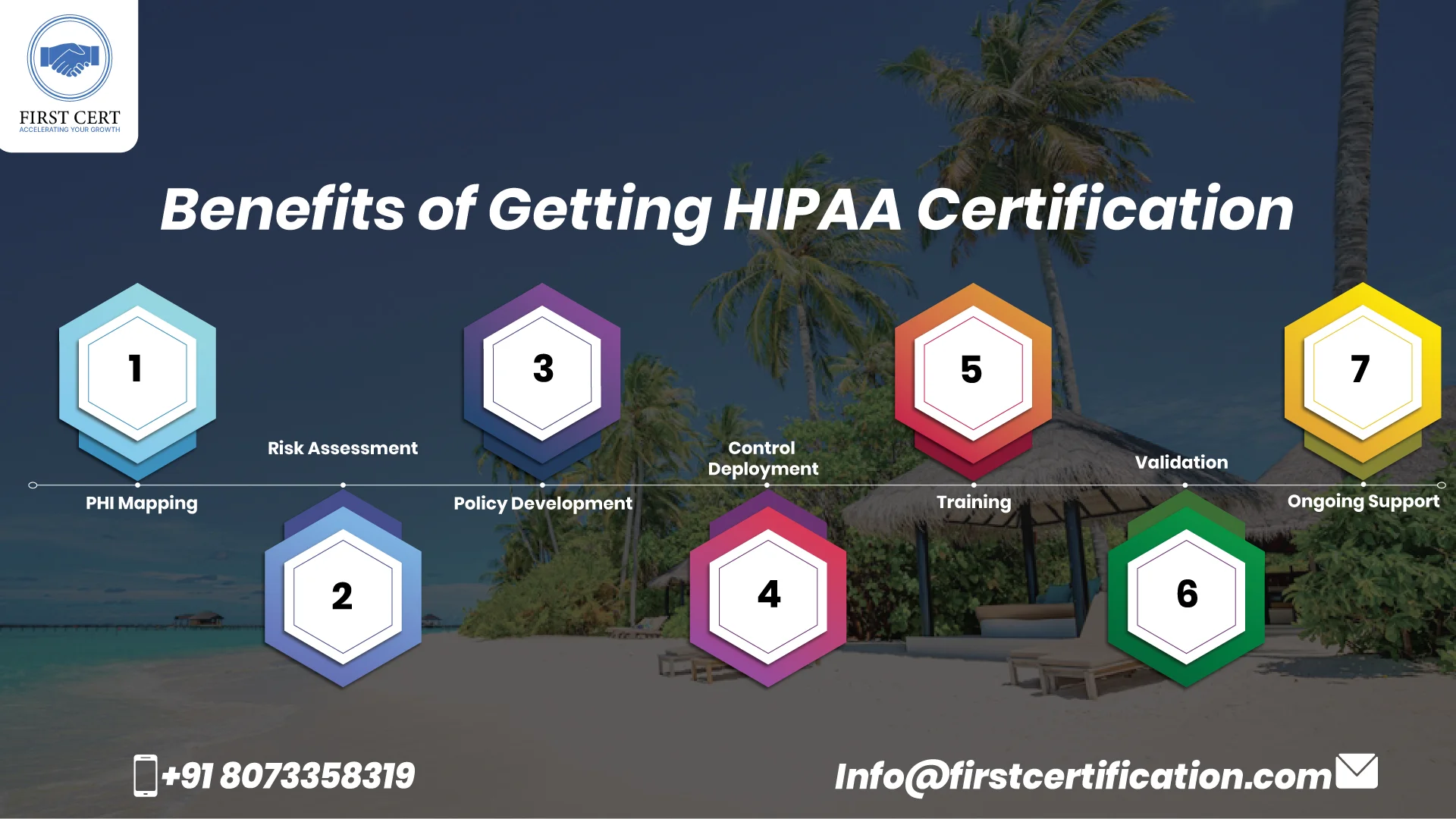
First Cert follows a structured, risk-based HIPAA consulting framework for organizations in Mauritius:
PHI Mapping
Identify where healthcare data is stored and processed
Risk Assessment
Evaluate gaps in administrative, technical, and physical safeguards
Policy Development
Create HIPAA-aligned privacy and security documentation
Control Deployment
Implement security and compliance controls
Training
Deliver role-based HIPAA education for employees
Validation
Test controls and close compliance gaps
Ongoing Support
Monitor compliance and regulatory updates
HIPAA Certification Cost in Mauritius
- Size and complexity of the organization
- Volume and sensitivity of healthcare data handled
- Scope of IT systems and cloud environments
- Existing maturity of privacy and security controls
- Training, documentation, and ongoing compliance needs
Start your HIPAA Certification journey in Mauritius with First Cert and demonstrate a strong commitment to healthcare data privacy, security, and internationally recognized compliance standards.