 Translate

ISO 27001 Certification in Yemen helps organizations establish a structured approach to securing sensitive information and managing cybersecurity risks effectively. As digital operations expand and data becomes a critical business asset, organizations must ensure confidentiality, integrity, and availability of information.
First Cert supports businesses in Yemen with tailored ISO 27001 consulting services that focus on practical security controls, risk reduction, and long-term compliance. Our approach ensures that information security is embedded into daily operations rather than treated as a one-time certification activity.
What is ISO 27001 Certification in Yemen?
ISO 27001 Certification in Yemen is an internationally accepted standard that specifies requirements for establishing, implementing, maintaining, and continually improving an Information Security Management System (ISMS).
The standard helps organizations identify threats, assess vulnerabilities, and implement controls to protect information assets such as:
Business-critical documents and records
Customer and employee personal data
Financial and operational information
Digital platforms, systems, and intellectual property
ISO 27001 certification demonstrates that an organization follows globally accepted best practices for information security and risk governance.
Which Businesses Need ISO 27001 Certification in Yemen?
ISO 27001 implementation in Yemen is suitable for any organization that handles sensitive or confidential information, including:
IT and software development companies
Internet service providers and technology firms
Financial services and microfinance institutions
Healthcare organizations and medical service providers
NGOs and international project organizations
Educational institutions and training centers
BPOs and data handling service providers
Organizations in Yemen working with international partners often require ISO 27001 certification to meet contractual and compliance expectations.
Benefits of Getting ISO 27001 Certification in Yemen
Improved Information Protection – Reduces exposure to data leaks and cyber incidents.
Structured Risk Management – Identifies and controls security risks proactively.
Increased Stakeholder Confidence – Builds trust with clients, donors, and partners.
Regulatory & Contractual Alignment – Supports compliance with global data protection requirements.
Operational Stability – Enhances resilience against security disruptions and incidents.
ISO 27001 certification helps organizations in Yemen build credibility while strengthening internal security governance.
ISO 27001 Certification in Yemen – Simple Process withFirst Cert
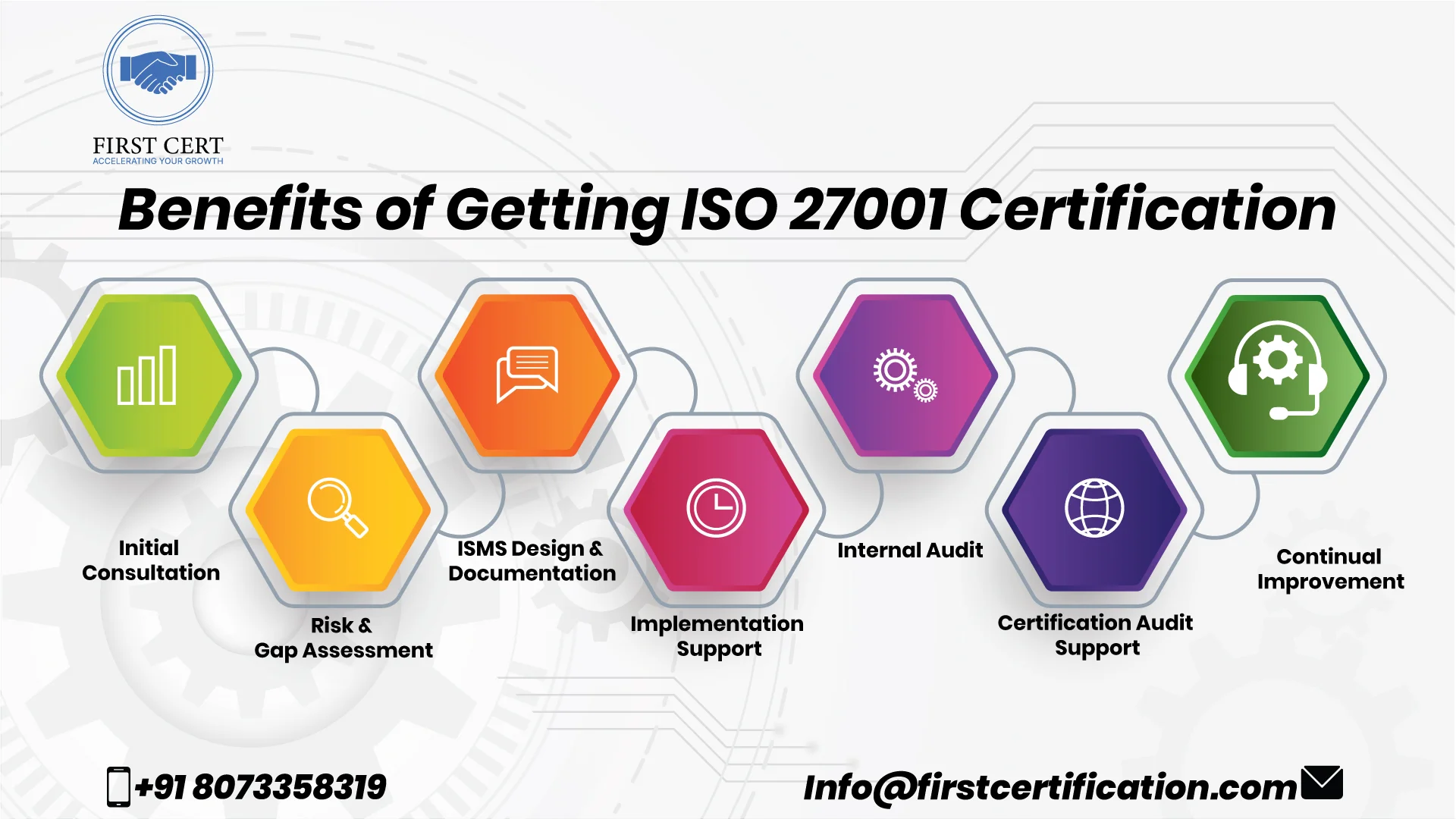
First Cert follows a clear, practical, and business-aligned ISMS implementation approach:
Initial Consultation
Understand business context, information assets, and security goals.
Risk & Gap Assessment
Identify current security gaps and risk exposure.
ISMS Design & Documentation
Develop policies, procedures, risk registers, and control plans.
Implementation Support
Assist with applying technical and organizational security controls.
Internal Audit
Review ISMS effectiveness and readiness.
Certification Audit Support
Guide organizations through the external audit process.
Continual Improvement
Ongoing support for maintaining and improving ISMS performance.
ISO 27001 Certification Cost in Yemen
- Organization size and workforce
- Type and sensitivity of information handled
- Complexity of IT systems and infrastructure
- Existing security maturity
- Scope of ISMS implementation
- Audit duration and certification body fees
