 Translate


HIPAA Certification in Yemen supports healthcare providers, IT companies, and service organizations in meeting strict U.S. healthcare data protection requirements. As global healthcare outsourcing and digital health services grow, organizations handling U.S. patient information must comply with HIPAA standards to remain eligible and trustworthy.
First Cert assists organizations in Yemen by delivering structured HIPAA compliance solutions that focus on protecting Protected Health Information (PHI), reducing legal exposure, and strengthening cybersecurity practices. Our approach emphasizes clarity, practicality, and long-term compliance readiness.
What is HIPAA Certification in Yemen?
HIPAA Certification in Yemen refers to aligning organizational practices with the Health Insurance Portability and Accountability Act, a U.S. regulation designed to protect patient health data. It establishes safeguards to ensure confidentiality, integrity, and availability of PHI.
HIPAA compliance requires organizations to implement:
- Administrative controls for data governance
- Technical safeguards such as access control and encryption
- Physical security for systems handling health information
- Incident response and breach notification procedures
Organizations in Yemen that process U.S. healthcare data rely on HIPAA compliance to demonstrate accountability and meet international healthcare security expectations.
Who Needs HIPAA Certification in Yemen?
HIPAA Certification is essential for organizations in Yemen that create, access, store, or transmit U.S. patient data, including:
Hospitals and Healthcare Facilities
Telemedicine and Digital Health Platforms
Medical Billing and Coding Service Providers
Diagnostic Laboratories and Research Centers
Pharmaceutical and Clinical Trial Organizations
IT, SaaS, and Cloud Service Providers Supporting Healthcare Systems
Healthcare Outsourcing and BPO Companies
HIPAA implementation helps these organizations operate securely while enabling cross-border healthcare collaborations.
Key Advantages of HIPAA Certification in Yemen
Protection of Patient Data – Safeguards PHI from unauthorized access and cyber threats.
Regulatory Readiness – Meets mandatory U.S. healthcare compliance requirements.
Business Eligibility – Enables partnerships with U.S.-based healthcare organizations.
Reduced Legal Exposure – Minimizes penalties and compliance risks.
Improved Trust – Strengthens confidence among healthcare clients and partners.
HIPAA certification positions organizations as responsible and security-focused healthcare service providers.
HIPAA Certification in Yemen – First Cert
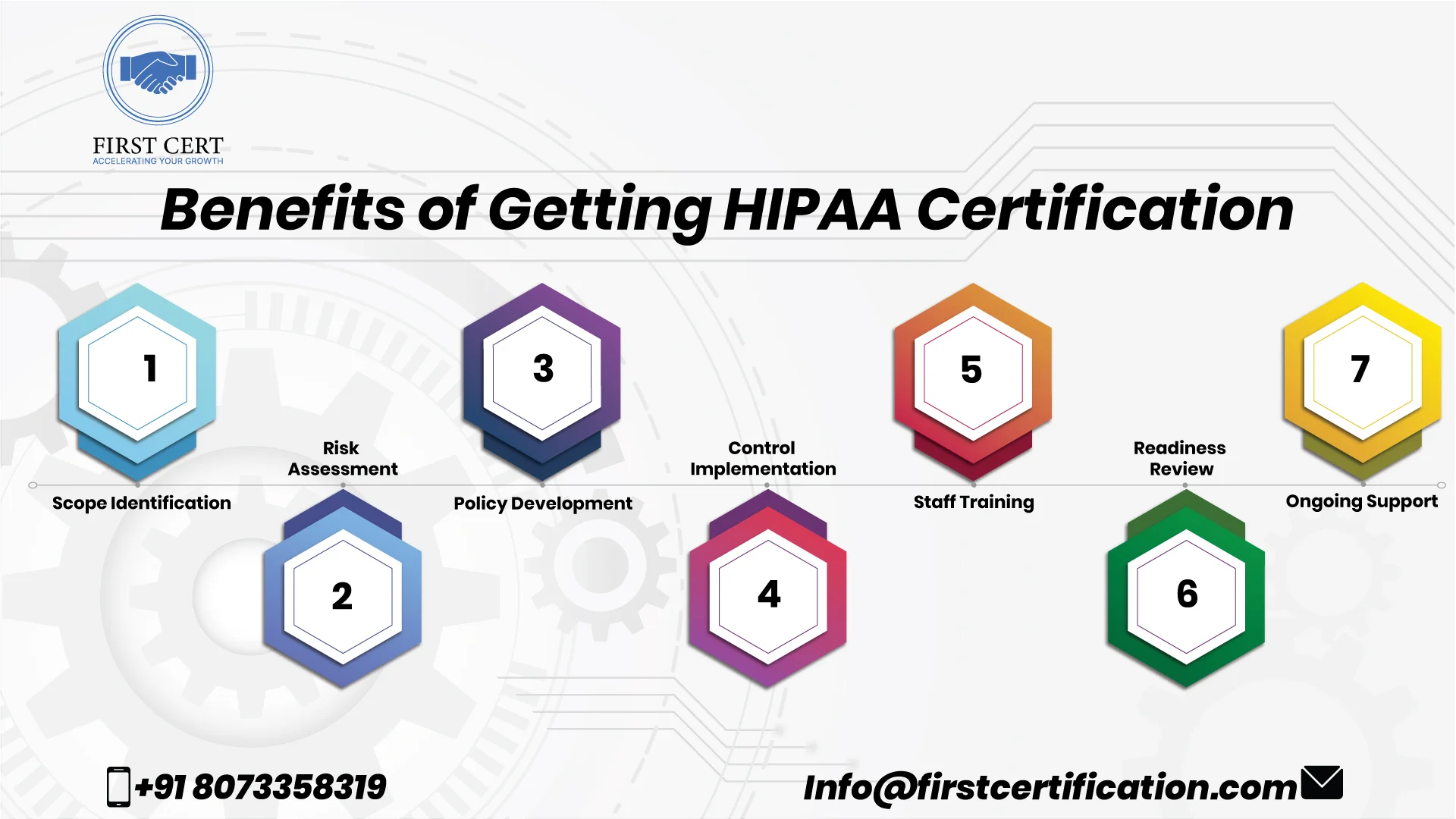
First Cert follows a practical and clearly defined HIPAA compliance methodology:
Scope Identification
Analyze PHI exposure and business operations.
Risk Assessment
Identify technical, administrative, and physical gaps.
Policy Development
Create HIPAA-compliant privacy and security documentation.
Control Implementation
Apply safeguards for data protection and access control.
Staff Training
Conduct HIPAA awareness and role-based training.
Readiness Review
Validate compliance and address identified gaps.
Ongoing Support
Continuous monitoring and compliance maintenance.
HIPAA Certification Cost in Yemen?
- Number of employees
- Volume and sensitivity of PHI
- IT infrastructure and system architecture
- Existing security maturity
- Documentation and training needs
