
ISO 27001 Certification in Nigeria helps organizations implement a systematic, risk-focused Information Security Management System (ISMS) to protect data and maintain operational resilience. With Nigeria's rapid digital growth across banking, healthcare, telecom, government services, e-commerce, and IT sectors, safeguarding sensitive information has become an essential organizational priority.
First Cert collaborates with Nigerian organizations to design ISMS frameworks that are practical, scalable, and aligned with operational realities. Our approach prioritizes proactive risk management, leadership engagement, and continuous security improvement rather than compliance-driven paperwork.
What ISO 27001 Certification in Nigeria Confirms
ISO 27001 Certification in Nigeria validates that an organization has established an ISMS in accordance with ISO/IEC 27001 international standards. The certification ensures systematic identification, assessment, and treatment of information security risks.
An effective ISMS helps organizations secure:
Confidential corporate records and operational documentation
Customer, employee, and partner personal data
Financial and transactional information
IT infrastructure, applications, networks, and cloud services
Intellectual property and sensitive organizational knowledge
ISO 27001 certification demonstrates that security risks are continuously monitored, managed, and improved through structured governance processes.
Organizations in Nigeria That Benefit from ISO 27001
ISO 27001 is suitable for any Nigerian organization handling sensitive or regulated data, including:
IT service providers, software firms, and technology startups
Cloud providers, data centers, and managed service companies
Banks, fintech firms, and financial institutions
Hospitals, healthcare providers, and medical technology companies
E-commerce businesses and digital service platforms
Outsourcing providers, BPOs, and shared service centers
Universities, research institutions, and training organizations
For many Nigerian organizations, ISO 27001 is critical for regulatory compliance, client trust, and international business opportunities.
Key Benefits of ISO 27001 Certification in Nigeria
Achieving ISO 27001 Certification in Nigeria delivers both operational and strategic advantages:
Reduced exposure to cyber threats, data breaches, and unauthorized access
Clear understanding of information security risks and control effectiveness
Enhanced trust from clients, regulators, and international partners
Improved incident response and business continuity readiness
Alignment with global cybersecurity, privacy, and compliance standards
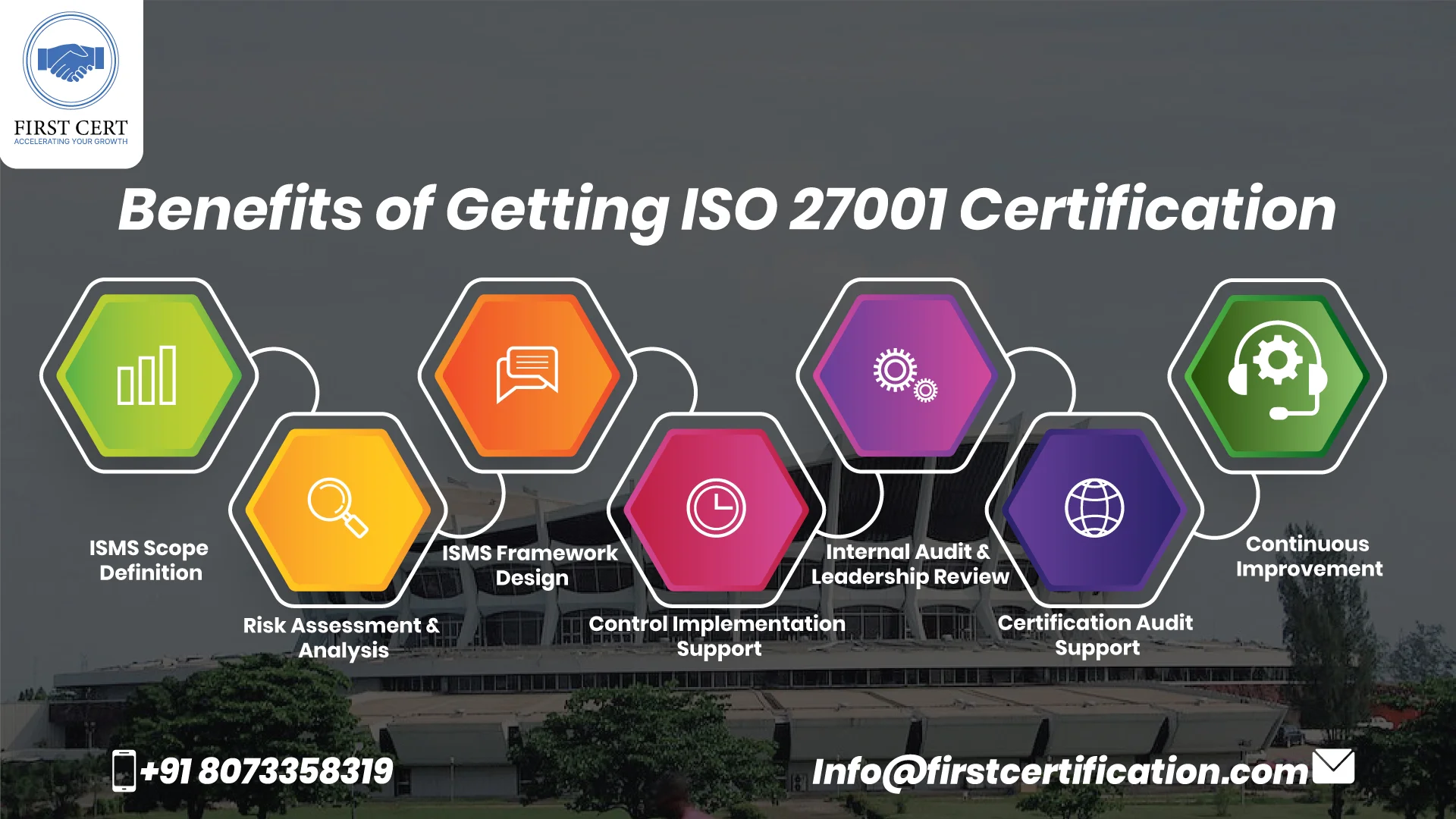
Integration of information security into organizational culture with leadership oversight and continuous improvement.
First Cert's ISO 27001 Consulting Methodology in Nigeria
First Cert applies a structured, risk-based ISO 27001 implementation approach for Nigerian organizations:
ISMS Scope Definition
Identify assets, systems, and information boundaries
Risk Assessment & Analysis
Evaluate threats, vulnerabilities, and business impacts
ISMS Framework Design
Develop policies, procedures, and risk treatment strategies
Control Implementation Support
Deploy administrative, technical, and physical safeguards
Internal Audit & Leadership Review
Ensure ISMS effectiveness and accountability
Certification Audit Support
Prepare and assist for Stage 1 and Stage 2 audits
Continuous Improvement
Maintain ISMS maturity and security posture over time
ISO 27001 Certification Cost in Nigeria
- Organization size and structure
- Volume and sensitivity of information assets
- IT infrastructure and cloud environment complexity
- Scope of ISMS controls, policies, and documentation
- Training, awareness, and audit preparation requirements
Begin your ISO 27001 Certification journey in Nigeria with First Cert and demonstrate commitment to secure information management and sustainable cybersecurity practices.