

HIPAA Certification in Nigeria enables organizations managing U.S. healthcare data to implement rigorous privacy, security, and accountability measures. With the rapid growth of digital health services, telemedicine platforms, medical research initiatives, and healthcare outsourcing in Nigeria, HIPAA compliance is vital for collaborating with U.S.-based hospitals, insurers, and technology partners.
First Cert works with organizations across Nigeria to build HIPAA programs that focus on real-world risk mitigation and operational reliability. Our methodology integrates privacy and security practices into day-to-day operations rather than relying solely on documentation for compliance.
What HIPAA Certification in Nigeria Entails
HIPAA Certification in Nigeria ensures that organizations comply with the U.S. Health Insurance Portability and Accountability Act, protecting the confidentiality, integrity, and availability of Protected Health Information (PHI). Compliance covers administrative, technical, and physical safeguards.
A robust HIPAA program in Nigeria typically includes:
- Establishing clear governance and ownership for PHI management
- Role-based access controls, encryption, and monitoring of systems
- Physical protections for facilities, devices, and servers
- Breach response planning, incident management, and notification readiness
Achieving HIPAA Certification demonstrates that Nigerian organizations can securely manage healthcare data while meeting international standards.
Organizations in Nigeria That Require HIPAA Compliance
HIPAA Certification in Nigeria is essential for organizations handling U.S. healthcare information, including:
Hospitals, clinics, and medical service providers
Telehealth and digital healthcare technology firms
Medical billing, coding, and revenue cycle management companies
Clinical research organizations and laboratories
Pharmaceutical, biotech, and life sciences enterprises
IT service providers, SaaS platforms, and cloud vendors serving healthcare clients
Healthcare outsourcing and shared service operations
HIPAA compliance allows Nigerian organizations to confidently work with international healthcare stakeholders.
Key Benefits of HIPAA Certification in Nigeria
Organizations that achieve HIPAA Certification in Nigeria gain multiple operational and business advantages:
Minimized risk of data breaches, penalties, and legal liability
Stronger governance and control over sensitive health information
Increased confidence from U.S. healthcare clients and auditors
Enhanced employee awareness and accountability for data protection
Elevated market reputation as a secure and compliant healthcare service provider
HIPAA compliance strengthens regulatory readiness while supporting sustainable business operations.
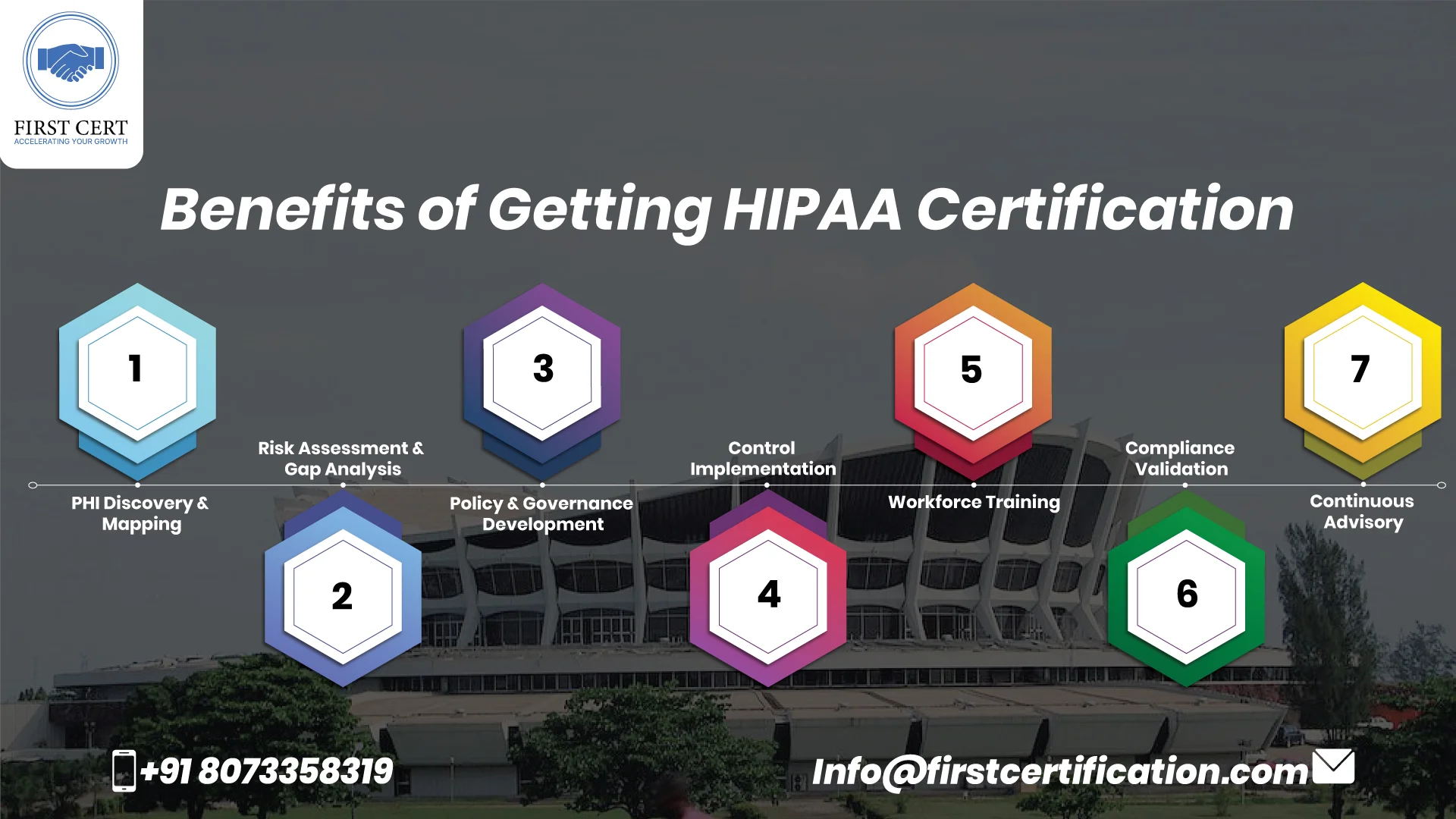
First Cert's HIPAA Implementation Framework in Nigeria
First Cert applies a structured HIPAA consulting methodology tailored for organizations in Nigeria:
PHI Discovery & Mapping
Identify healthcare data sources, storage locations, and flow paths
Risk Assessment & Gap Analysis
Evaluate administrative, technical, and physical safeguards
Policy & Governance Development
Create HIPAA-aligned privacy and security documentation
Control Implementation
Deploy technical and operational safeguards
Workforce Training
Deliver role-specific HIPAA awareness programs
Compliance Validation
Test safeguards and remediate gaps
Continuous Advisory
Support ongoing monitoring and regulatory alignment
HIPAA Certification Cost in Nigeria
- Organization size and operational complexity
- Volume, type, and sensitivity of healthcare data handled
- Scope of IT infrastructure and cloud environments
- Maturity of existing privacy and security controls
- Training, documentation, and ongoing compliance needs
Start your HIPAA Certification journey in Nigeria with First Cert and demonstrate a strong commitment to healthcare data privacy, security, and internationally recognized compliance standards.