ISO 27001 Certification in South Korea is a globally recognized information security standard that helps organizations protect sensitive information, manage cyber risks, and establish a robust Information Security Management System (ISMS). Developed by the International Organization for Standardization (ISO), ISO 27001 provides a systematic framework for identifying, assessing, and managing information security risks.
As one of the world's most technologically advanced economies, South Korea has a strong digital infrastructure and a rapidly evolving business environment. Organizations operating in sectors such as technology, finance, healthcare, telecommunications, manufacturing, and e-commerce face increasing cybersecurity threats and regulatory expectations. ISO 27001 Certification helps organizations establish effective security controls, reduce vulnerabilities, and build trust with customers, partners, and stakeholders.
What is ISO 27001 Certification?
ISO 27001 is the internationally recognized standard for Information Security Management Systems (ISMS). It provides a structured approach to managing information security risks and protecting critical business information from unauthorized access, loss, misuse, or cyberattacks.
The standard focuses on risk management, security governance, asset protection, access controls, incident management, business continuity, and continual improvement. Organizations that implement ISO 27001 demonstrate their commitment to maintaining the confidentiality, integrity, and availability of information assets.
Why is ISO 27001 Certification Important in South Korea?
With increasing reliance on digital technologies, cloud computing, and online services, information security has become a top priority for businesses across South Korea. Cyber threats, data breaches, ransomware attacks, and insider risks can significantly impact business operations and reputation.
ISO 27001 Certification helps organizations proactively identify security risks, implement appropriate controls, and establish a culture of security awareness. It also demonstrates to customers, regulators, and business partners that the organization follows internationally accepted information security practices.
Who Should Obtain ISO 27001 Certification in South Korea?
ISO 27001 Certification is suitable for organizations that collect, process, store, or transmit sensitive information. Industries that commonly pursue ISO 27001 Certification in South Korea include:
- Information Technology Companies
- Software Development Firms
- Cloud Service Providers
- Financial Institutions
- Healthcare Organizations
- Telecommunications Providers
- E-commerce Businesses
- Manufacturing Companies
- Government Contractors
- Business Process Outsourcing (BPO) Organizations
Implementing ISO 27001 helps South Korean organizations protect confidential information, reduce cyber risks, and increase customer trust — key factors for success in the digital economy.
Benefits of ISO 27001 Certification in South Korea
ISO 27001 Certification in South Korea offers multiple strategic and operational benefits:
Enhanced Information Security – Protect sensitive business, customer, and employee information from cyber threats and unauthorized access.
Improved Customer Trust – Demonstrate a strong commitment to protecting confidential information and maintaining data security.
Better Risk Management – Identify, assess, and mitigate information security threats before they impact operations.
Regulatory Compliance Support – Align with legal, contractual, and regulatory requirements related to information security and data protection.
Reduced Cybersecurity Incidents – Implement preventive and corrective security controls to reduce the likelihood of security breaches.
Competitive Advantage – Strengthen credibility when competing for contracts and business opportunities requiring strong security practices.
With First Cert, achieving ISO 27001 Certification in South Korea becomes a streamlined and value-driven process — ensuring compliance, data integrity, and sustained growth.
ISO 27001 Certification Process with First Cert
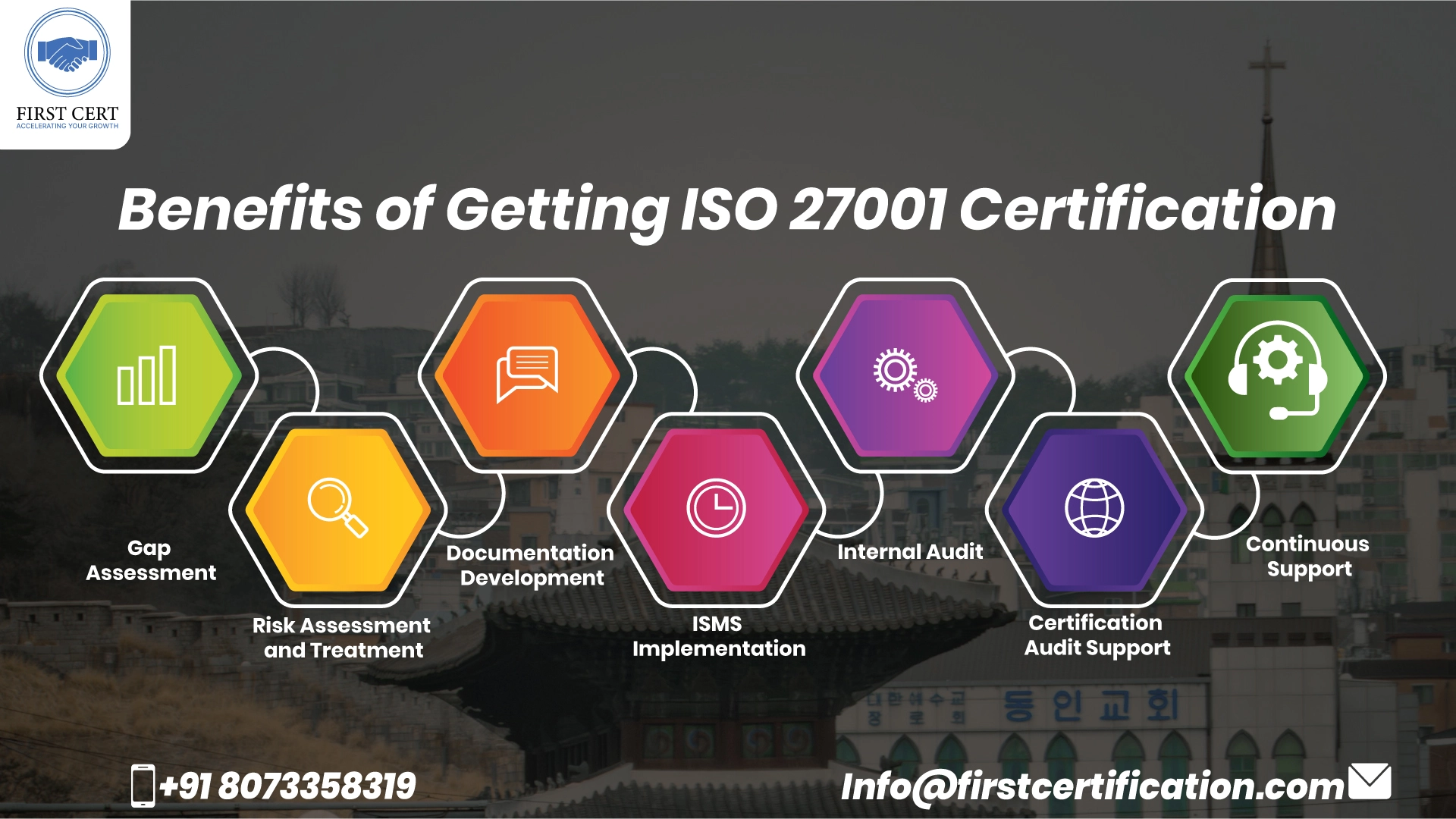
Gap Assessment
Our consultants evaluate your existing information security practices and identify gaps against ISO 27001 requirements.
Risk Assessment and Treatment
We help organizations identify information security risks and develop appropriate risk treatment plans and security controls.
Documentation Development
We assist in creating ISMS policies, procedures, risk registers, Statement of Applicability (SoA), and other required documentation.
ISMS Implementation
Security controls and management processes are implemented across relevant business functions to ensure compliance with ISO 27001 requirements.
Internal Audit
Comprehensive internal audits are conducted to verify the effectiveness of the Information Security Management System.
Certification Audit Support
We provide complete support during the external certification audit process to help organizations successfully achieve ISO 27001 Certification.
Apply for Your Certification Today
REGISTER NOWCost of ISO 27001 Certification in South Korea
- Size of the organization
- Number of employees
- Complexity of IT infrastructure
- Scope of certification
- Business locations
- Existing information security controls
Our Team

Tazeem Yaqut
Head of Health safety

Farhan
Director (Sales)

Mehtab Alam
Head of Customer Support
Client Says
One of the best ISO certification consultant in Banglore. Have received great service on time from here, expert in ISO 9001, 14001, 45001, 22000, 27001, 13485 Certifications.
 View on Google
First Cert has successfully achieved ISO 27001 certification for its consulting services. Their team provided excellent support throughout the gap analysis, risk assessment, documentation and audit preparation processes—making the entire process simple and efficient. First Cert's hands-on approach to improving our actual information security practices (rather than just paperwork) has been exceptional and we would recommend them to any organisation looking for professionals to assist with ISO 27001
View on GoogleDeep knowledge of ISO 27001, VAPT, GDPR, HIPAA, PCI DSS, SOC2 and other compliances certification.
View on GoogleWorldwide Client Trust







Frequently Asked Questions
Find answers to common questions about our services