 Translate

ISO 27001 Certification in Iraq enables organizations to manage information security risks through a structured and internationally recognized framework. As Iraq continues to expand across sectors such as energy, construction, banking, telecommunications, healthcare, and digital services, safeguarding sensitive data has become a critical operational and regulatory priority.
First Cert supports organizations across Iraq in building Information Security Management Systems that align with real business processes. Our approach emphasizes risk reduction, operational clarity, and sustainable security governance rather than documentation-heavy compliance models.
Understanding ISO 27001 Certification in Iraq
ISO 27001 Certification in Iraq confirms that an organization has implemented an Information Security Management System in accordance with ISO/IEC 27001 standards. The standard provides a systematic method to identify information risks, apply appropriate controls, and continuously enhance security effectiveness.
An ISO 27001-aligned ISMS helps protect:
Confidential business and operational data
Personal data belonging to customers and employees
Financial records and contractual information
IT infrastructure, cloud platforms, and applications
Intellectual property and proprietary business knowledge
Certification demonstrates disciplined, globally accepted information security practices.
Organizations in Iraq That Require ISO 27001
ISO 27001 Certification in Iraq is relevant for organizations that create, store, process, or manage sensitive information, including:
IT companies, software developers, and SaaS providers
Cloud hosting firms, data centers, and managed service providers
Banks, fintech organizations, and financial institutions
Healthcare providers, laboratories, and medical service operators
E-commerce platforms and digital service businesses
BPOs, shared service centers, and outsourcing companies
Educational institutions and research organizations
For many Iraqi organizations, ISO 27001 is increasingly required by clients, regulators, and international partners.
Business Benefits of ISO 27001 Certification in Iraq
Organizations that achieve ISO 27001 Certification in Iraq gain strong operational and strategic advantages, such as:
Reduced exposure to cyber threats and data breaches
Improved visibility and control over information security risks
Increased trust from customers, regulators, and stakeholders
Better preparedness for incidents and operational disruptions
Alignment with international cybersecurity and data protection expectations
ISO 27001 positions information security as a core component of enterprise governance.
First Cert's ISO 27001 Consulting Methodology in Iraq
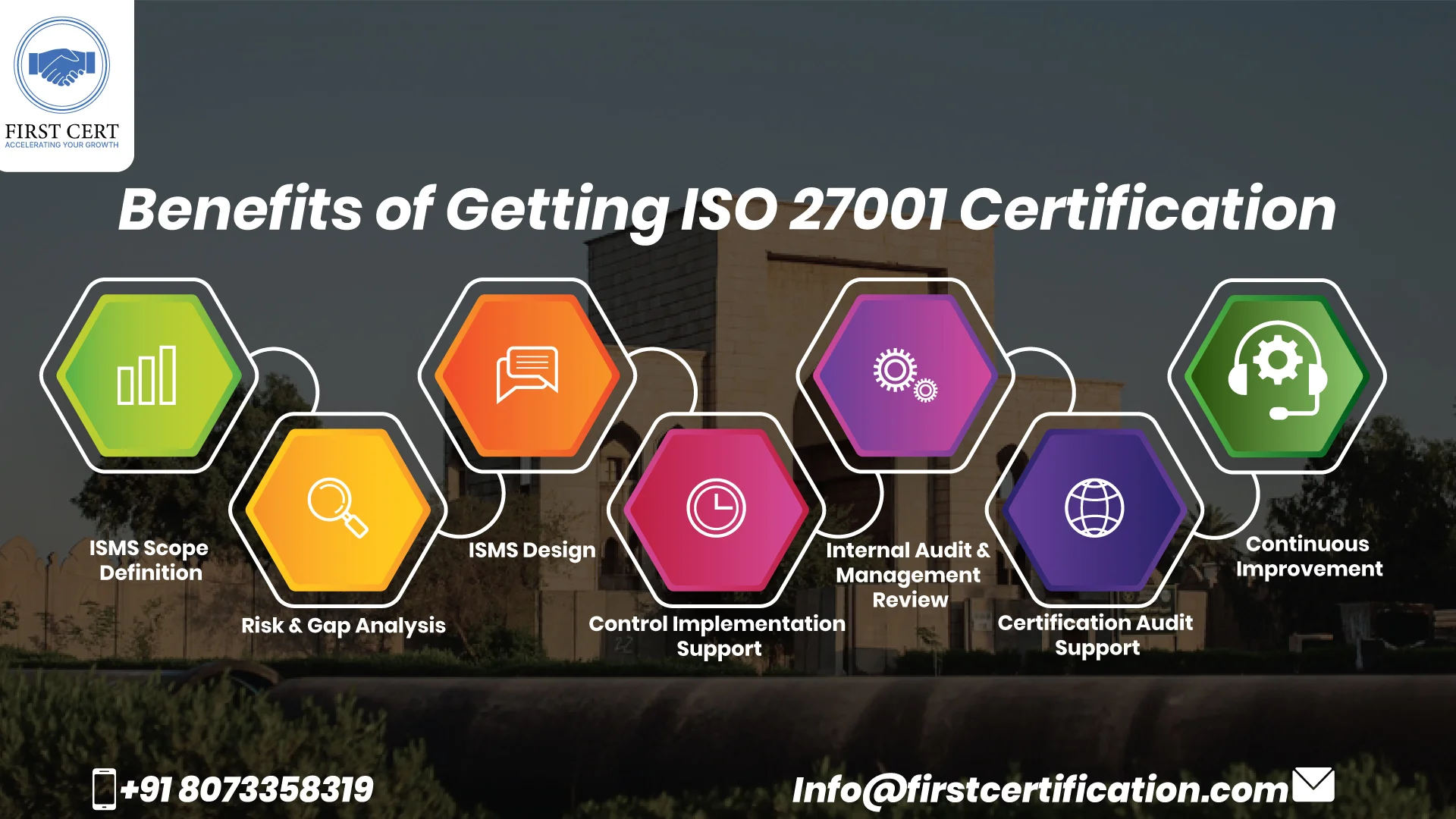
First Cert applies a structured and risk-focused ISO 27001 implementation approach tailored to Iraqi organizations:
ISMS Scope Definition
Identify assets, systems, and security boundaries
Risk & Gap Analysis
Evaluate threats and compare current controls with ISO 27001 requirements
ISMS Design
Develop policies, procedures, risk treatment plans, and security objectives
Control Implementation Support
Assist with technical, administrative, and physical controls
Internal Audit & Management Review
Validate ISMS effectiveness and leadership involvement
Certification Audit Support
Coordinate Stage 1 and Stage 2 audits
Continuous Improvement
Support ongoing compliance and security maturity
ISO 27001 Certification Cost in Iraq
- Organizational size and business structure
- Nature and sensitivity of information assets
- Complexity of IT and cloud environments
- Scope of ISMS controls and documentation
- Training requirements and audit preparation needs
Start your ISO 27001 Certification journey in Iraq with First Cert and demonstrate your commitment to secure information management and sustainable cybersecurity practices.
