 Translate


HIPAA Certification in Saudi Arabia enables healthcare providers and service organizations to meet U.S. healthcare data protection standards while safeguarding sensitive patient information. As cross-border healthcare services and digital health platforms expand, HIPAA compliance has become critical for organizations handling Protected Health Information (PHI).
First Cert assists organizations across Saudi Arabia in building secure, compliant, and auditable HIPAA frameworks. Our end-to-end approach helps reduce regulatory risk, strengthen cybersecurity controls, and ensure trusted healthcare data management aligned with U.S. requirements.
What is HIPAA Certification in Saudi Arabia?
HIPAA Certification in Saudi Arabia refers to implementing and validating compliance with the U.S. Health Insurance Portability and Accountability Act for organizations managing U.S. patient data. The framework focuses on protecting PHI through administrative, technical, and physical safeguards.
HIPAA compliance ensures:
Secure access control and authentication
Encryption and safe storage of medical data
Incident response and breach reporting readiness
Privacy-driven data handling practices
Organizations in Saudi Arabia working with U.S. healthcare providers, insurers, or medical platforms rely on HIPAA compliance to maintain legal eligibility and international trust.
Who Should Implement HIPAA Certification in Saudi Arabia?
HIPAA Certification is essential for Saudi Arabia-based organizations involved in healthcare data processing, including:
Hospitals, Clinics, and Medical Centers
Health-Tech & Telemedicine Companies
Medical Billing and Revenue Cycle Firms
Clinical Research & Diagnostic Labs
Pharmaceutical & Life Sciences Organizations
IT, Cloud, and SaaS Providers supporting healthcare systems
Healthcare Outsourcing & BPO Companies
HIPAA compliance enables these organizations to operate securely while supporting U.S. healthcare partnerships and outsourcing contracts.
Benefits of HIPAA Certification in Saudi Arabia
Strong PHI Protection – Safeguards patient data from unauthorized access and cyber incidents.
U.S. Regulatory Alignment – Meets mandatory healthcare compliance expectations.
Increased Client Confidence – Builds trust with hospitals, insurers, and healthcare partners.
Eligibility for Global Healthcare Projects – Supports U.S. healthcare outsourcing and IT contracts.
Reduced Security & Legal Risk – Minimizes penalties, breaches, and compliance failures.
HIPAA certification strengthens both data security posture and market credibility.
HIPAA Certification Implementation in Saudi Arabia with First Cert
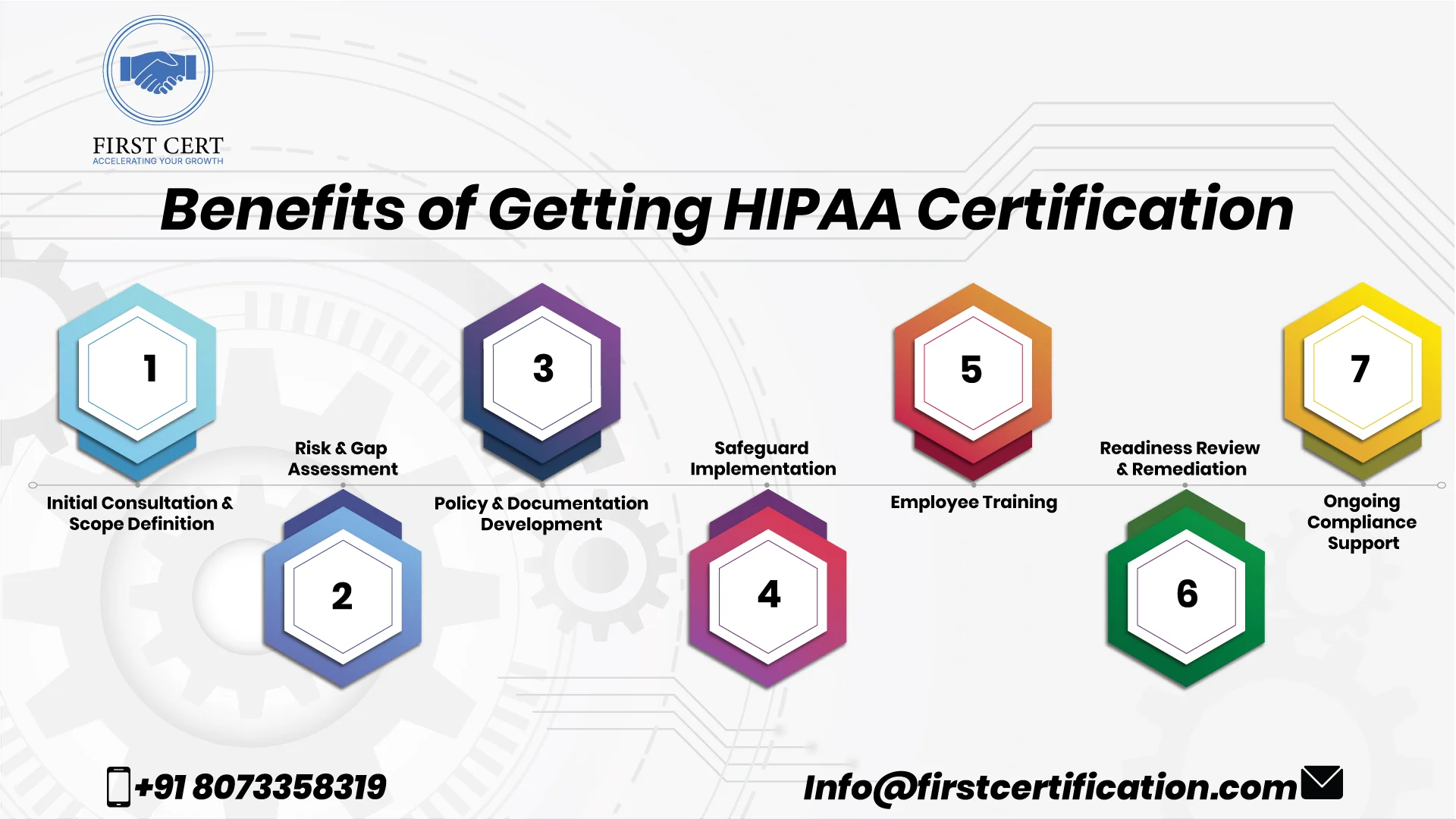
First Cert follows a practical and structured HIPAA compliance methodology:
Initial Consultation & Scope Definition
Identify PHI exposure and HIPAA compliance needs.
Risk & Gap Assessment
Analyze technical and administrative vulnerabilities.
Policy & Documentation Development
Privacy, Security, and Breach Notification policies.
Safeguard Implementation
Technical, physical, and procedural controls.
Employee Training
Role-based HIPAA awareness programs.
Readiness Review & Remediation
Address gaps before compliance validation.
Ongoing Compliance Support
Monitoring, updates, and audit assistance.
How Much Does HIPAA Certification Cost in Saudi Arabia?
- Size of the organization
- Volume and sensitivity of PHI handled
- IT systems and infrastructure complexity
- Existing security controls and maturity
- Training and documentation scope
