

HIPAA Certification in Chicago helps organizations that manage U.S. healthcare data implement robust privacy, security, and accountability measures. Chicago's healthcare ecosystem—including telehealth providers, biotech firms, digital health startups, SaaS platforms, and healthcare outsourcing—requires stringent compliance to build trust with hospitals, insurers, and technology partners.
First Cert guides Chicago organizations to integrate HIPAA compliance into daily operations, prioritizing practical risk management, audit readiness, and secure processes rather than documentation alone.
What HIPAA Certification Means in Chicago
HIPAA Certification verifies that an organization fully adheres to the U.S. Health Insurance Portability and Accountability Act, implementing comprehensive administrative, technical, and physical safeguards to protect sensitive healthcare information. Certified organizations establish clear ownership and accountability for Protected Health Information (PHI), ensuring that responsibilities for data management are well-defined across teams.
They enforce role-based access control and encryption to safeguard sensitive systems, while maintaining secure storage protocols for devices, data, and physical facilities. HIPAA also emphasizes robust incident response planning, breach detection, management, and reporting, enabling organizations to respond quickly and effectively to potential security events.
Achieving HIPAA Certification demonstrates to clients, partners, and regulators that healthcare data is managed responsibly, securely, and in compliance with U.S. regulatory standards, building trust, reducing risk exposure, and promoting a culture of privacy and security across the organization.
Organizations in Chicago That Need HIPAA Compliance
HIPAA applies to organizations handling U.S. healthcare data, including:
Hospitals, clinics, and medical practices
Telemedicine and digital health platforms
Medical billing, coding, and revenue cycle management services
Biotech companies and clinical research labs
IT service providers, SaaS, and cloud vendors
Healthcare outsourcing and shared service centers
Compliance allows these organizations to operate confidently in regulated healthcare environments.
Benefits of HIPAA Certification in Chicago
Reduced risk of data breaches, penalties, and legal exposure
Stronger governance over sensitive healthcare information
Increased trust from clients, auditors, and business partners
Better staff awareness and accountability
Enhanced credibility as a compliant healthcare organization
HIPAA compliance supports both regulatory readiness and long-term operational stability.
First Cert's HIPAA Implementation Framework in Chicago
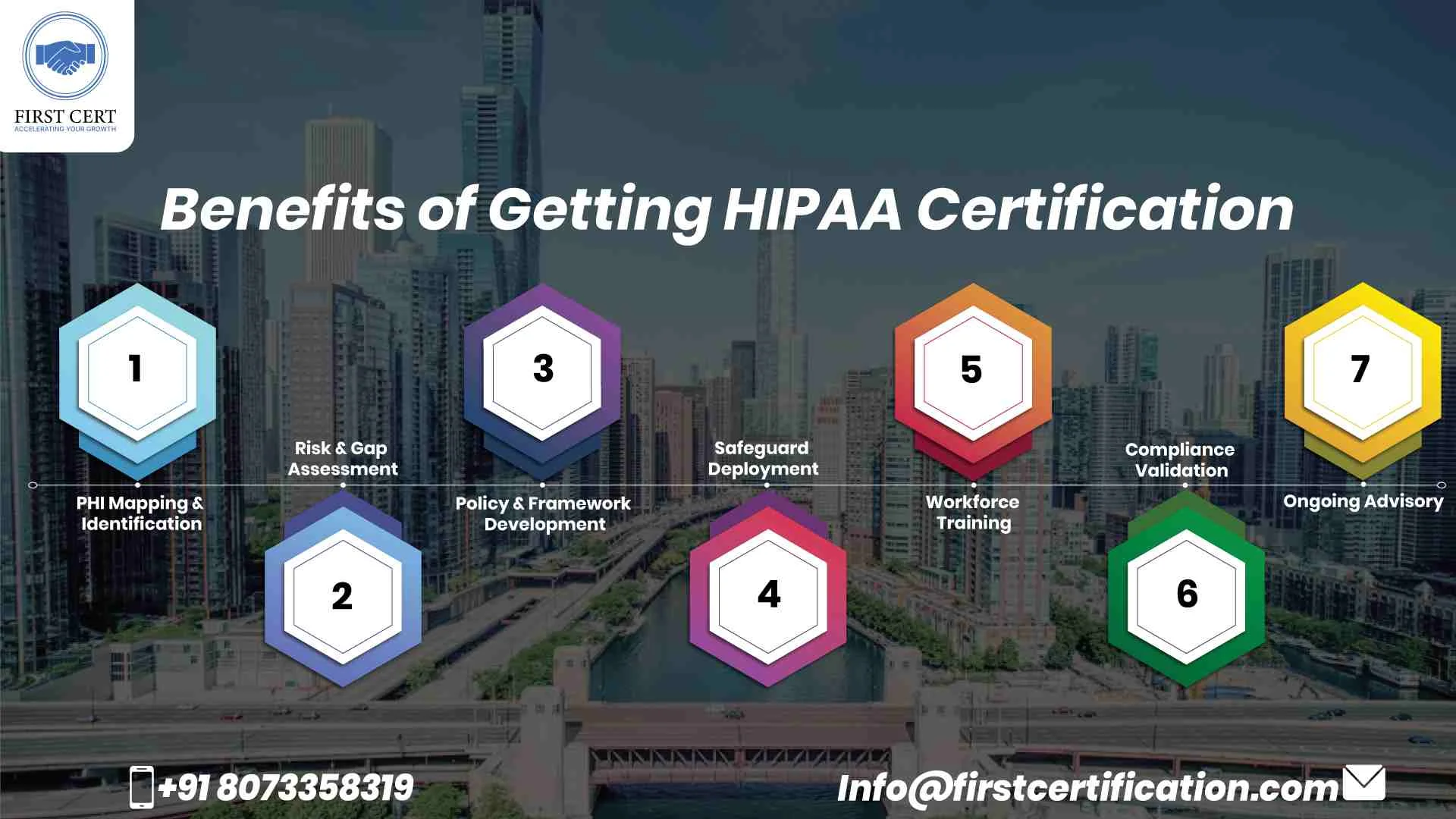
PHI Mapping & Identification
Track and document healthcare data flows
Risk & Gap Assessment
Identify privacy, security, and operational vulnerabilities
Policy & Framework Development
Implement HIPAA-compliant controls
Safeguard Deployment
Apply administrative, technical, and physical protections
Workforce Training
Conduct role-based HIPAA awareness programs
Compliance Validation
Test and remediate any gaps
Ongoing Advisory
Provide continuous compliance support and audit readiness
HIPAA Certification Cost in Chicago
- Organization size and complexity
- Volume and type of PHI processed
- IT infrastructure and cloud usage
- Current maturity of privacy and security measures
- Training, audit preparation, and ongoing support requirements