
GDPR Certification in Egypt enables organizations to lawfully and responsibly manage personal data related to individuals within the European Union. As Egyptian businesses increasingly engage in international trade, digital platforms, outsourcing services, and cross-border data processing, GDPR compliance has become essential for maintaining trust, eligibility, and regulatory alignment.
First Cert collaborates with organizations across Egypt to integrate GDPR requirements into everyday business operations. Our approach emphasizes practical governance, clear accountability, and measurable risk reduction—ensuring privacy compliance becomes a long-term operational capability rather than a one-time regulatory task.
What GDPR Certification in Egypt Signifies
GDPR Certification in Egypt demonstrates that an organization's data handling practices align with the principles of the EU General Data Protection Regulation. This ensures personal data is collected, processed, stored, and shared in a lawful, transparent, and secure manner.
A robust GDPR compliance framework typically includes:
- Clearly established legal grounds for data collection and processing
- Controlled management of data access, storage, retention, and transfers
- Defined procedures for handling data subject rights requests
- Organizational and technical safeguards for protecting personal data
- Incident response mechanisms for breach identification and notification
Certification reflects a mature and accountable approach to privacy management.
Organizations in Egypt Impacted by GDPR
GDPR applies to organizations in Egypt that process or control personal data of individuals located in the European Union, regardless of the organization's physical location. Commonly affected sectors include:
Software companies, IT service providers, and managed service firms
SaaS businesses, cloud platforms, and digital startups
E-commerce companies, subscription platforms, and online marketplaces
Data processing and business outsourcing organizations
Banks, fintech providers, and payment service companies
Healthcare, research, and life sciences institutions
Marketing agencies, analytics firms, and data-driven consultancies
GDPR compliance allows Egyptian organizations to operate confidently within EU regulatory expectations.
Key Business Benefits of GDPR Certification in Egypt
Organizations achieving GDPR Certification in Egypt gain both compliance assurance and strategic advantages, including:
Improved visibility and control over personal data usage
Reduced risk of regulatory penalties and contractual exposure
Increased trust from EU customers, regulators, and partners
Clearly defined privacy roles, responsibilities, and escalation paths
Enhanced reputation as a data-responsible and privacy-focused organization
GDPR transforms privacy protection into a foundation for sustainable growth and credibility.
First Cert's GDPR Consulting Methodology in Egypt
First Cert delivers GDPR services in Egypt through a structured and business-aligned implementation model:
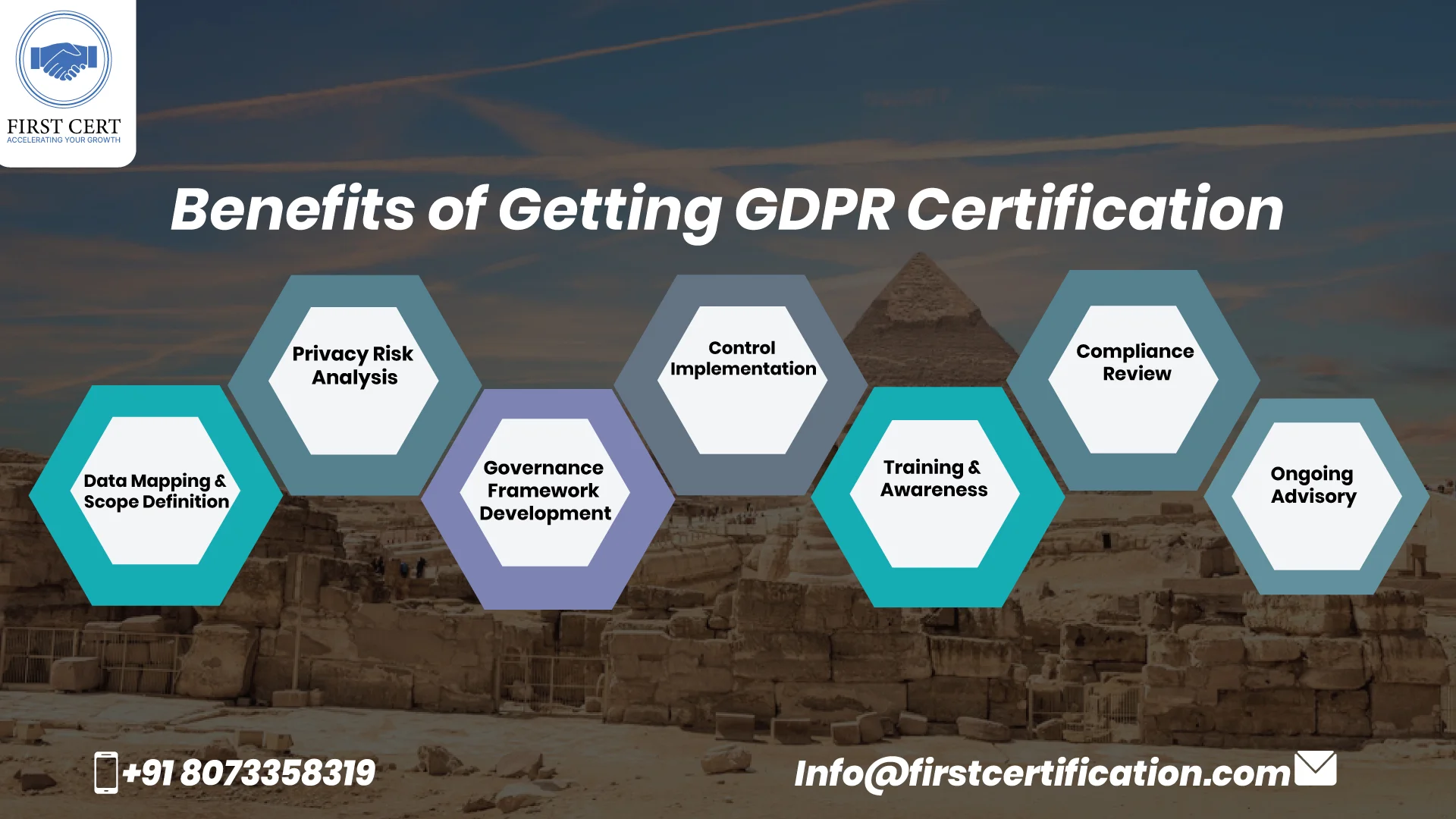
Data Mapping & Scope Definition
Identify personal data sources, flows, and processing activities
Privacy Risk Analysis
Assess compliance gaps and exposure points
Governance Framework Development
Create privacy policies, notices, and processing records
Control Implementation
Establish access controls, retention rules, and response workflows
Training & Awareness
Educate employees and leadership on GDPR responsibilities
Compliance Review
Validate effectiveness and remediate outstanding gaps
Ongoing Advisory
Support regulatory updates and continuous privacy management
GDPR Certification Cost in Egypt
- Organization size and operational complexity
- Volume, sensitivity, and types of personal data processed
- Cross-border data transfers and third-party vendor involvement
- Scope of documentation, training, and advisory support required
- Existing maturity of privacy and information security controls
Start your GDPR Certification journey in Egypt with First Cert and build a strong, privacy-driven foundation for regulatory confidence and international success.