
Who Needs ISO 9001 Certification?
In today's competitive and quality-driven global marketplace, organizations are under constant pressure to deliver consistent, reliable, and high-quality products and services. One of the most recognized and trusted ways to demonstrate this commitment is through ISO 9001 Certification, the world's leading standard for Quality Management Systems (QMS).
But a common question arises among business owners and decision-makers: Who actually needs ISO 9001 certification?
From an expert perspective, backed by international standards and industry practices, the answer is clear: any organization that aims to improve operational efficiency, enhance customer satisfaction, and build long-term credibility can benefit from ISO 9001 certification—regardless of size, sector, or geographic location.
ISO 9001 is developed by the International Organization for Standardization (ISO), a globally recognized authority that ensures standards are based on best practices, expert consensus, and continual improvement principles. This makes ISO 9001 not just a certification, but a strategic framework for sustainable business growth.
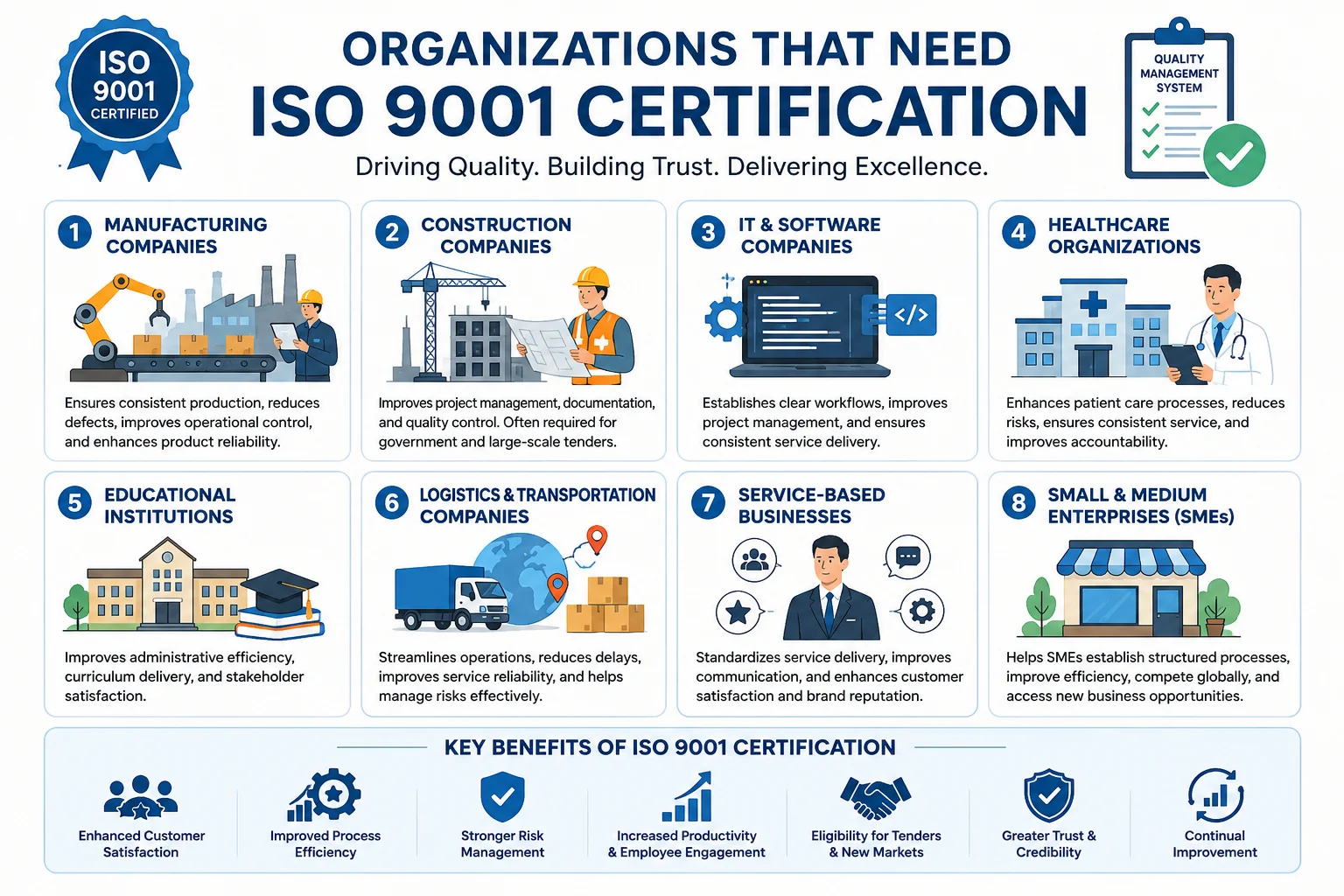
Organizations That Need ISO 9001 Certification
Manufacturing Companies
Manufacturers operate in environments where consistency, precision, and compliance are critical. ISO 9001 helps establish standardized production processes, reduce defects, and ensure products meet both regulatory and customer requirements. Organizations with ISO 9001 certification often experience improved operational control, reduced waste, and enhanced product reliability—key factors in maintaining competitiveness in global supply chains.
Construction Companies
In the construction industry, quality failures can lead to significant financial and safety risks. ISO 9001 certification provides a structured approach to project management, documentation, and quality control. Many government and private sector tenders require ISO 9001 certification as a prerequisite, making it essential for companies seeking large-scale contracts and long-term credibility.
IT and Software Companies
For IT service providers and software development firms, maintaining consistent service delivery and minimizing errors is crucial. ISO 9001 helps establish clear workflows, improve project management, and ensure customer requirements are consistently met. It also strengthens client trust, especially when dealing with international clients who prioritize certified vendors.
Healthcare Organizations
Healthcare institutions, including hospitals, clinics, laboratories, and medical device manufacturers, must adhere to strict quality and safety standards. ISO 9001 supports these organizations by improving patient care processes, reducing risks, and ensuring consistent service delivery. It also enhances accountability and traceability—critical factors in healthcare environments.
Educational Institutions
Educational organizations benefit from ISO 9001 by improving administrative efficiency, curriculum delivery, and stakeholder satisfaction. By implementing a structured quality management system, institutions can ensure consistent educational outcomes and demonstrate accountability to students, parents, and regulatory bodies.
Logistics and Transportation Companies
In logistics and supply chain management, efficiency and accuracy are essential. ISO 9001 helps organizations streamline operations, reduce delays, and improve service reliability. Certified companies are better equipped to manage risks, optimize processes, and meet customer expectations in a highly competitive industry.
Service-Based Businesses
Service-oriented organizations such as consultancies, financial institutions, legal firms, and hospitality businesses rely heavily on customer satisfaction and service consistency. ISO 9001 provides a framework to standardize service delivery, improve communication, and enhance overall customer experience—leading to stronger brand reputation and client retention.
Small and Medium Enterprises (SMEs)
A common misconception is that ISO 9001 is only for large corporations. In reality, SMEs often gain significant advantages from certification. It helps small businesses establish structured processes, improve efficiency, and compete with larger organizations. Additionally, ISO 9001 certification can open doors to new markets and business opportunities that require certified suppliers.
Why Do Organizations Choose ISO 9001 Certification?
Organizations pursue ISO 9001 certification not just for compliance, but for strategic growth and operational excellence. Based on industry experience and best practices, key benefits include:
- Enhanced customer satisfaction through consistent quality delivery
- Improved process efficiency and reduced operational waste
- Stronger internal controls and risk management
- Increased productivity and employee engagement
- Eligibility for government and international tenders
- Greater trust and credibility with stakeholders
- A structured approach to continual improvement
Importantly, ISO 9001 certification involves independent third-party audits, which provide objective validation that an organization's quality management system meets internationally recognized standards. This external verification significantly enhances trust and authority in the marketplace.
Is ISO 9001 Certification Mandatory?
ISO 9001 certification is not legally mandatory for most organizations. However, in many industries, it has become a de facto requirement. Government agencies, multinational corporations, and large buyers often require suppliers to hold ISO 9001 certification as part of their procurement criteria. In such cases, certification is not just a quality benchmark—it becomes a critical factor for business eligibility and competitive advantage.
How to Get ISO 9001 Certification
Achieving ISO 9001 certification requires a systematic and well-documented approach. Based on industry best practices, the process typically includes:
- Conducting a gap analysis to assess current processes
- Developing and implementing a Quality Management System (QMS)
- Creating necessary documentation and procedures
- Training employees and ensuring process alignment
- Performing internal audits to identify improvements
- Undergoing certification audits by an accredited certification body
- Receiving certification upon successful compliance
Organizations are encouraged to work with experienced consultants or certification bodies to ensure a smooth and effective implementation process.
To gain a deeper understanding of the certification process, requirements, costs, and benefits, you can explore this comprehensive guide on ISO 9001 Certification:
Conclusion
ISO 9001 certification is not limited to a specific industry or organization size—it is a globally recognized framework that supports quality, efficiency, and continuous improvement across all sectors. Whether you are a startup, SME, multinational corporation, or service provider, implementing ISO 9001 can significantly enhance your operational performance and market credibility.
From an expert standpoint, organizations that invest in ISO 9001 certification position themselves for long-term success by building trust, improving processes, and delivering consistent value to customers. In an increasingly competitive business environment, this level of commitment to quality is not just beneficial—it is essential.